
I remember one of my directs stepping into a new manager role, only to inherit a team with one or two employees who just weren’t cutting it. From day one, it was a challenge. He hesitated. He first tried to avoid HR, sidestep PIPs, and hoped things would somehow work themselves out. And honestly? I get it. When you’re managing people, it’s impossible not to think about their families, their lives, and what this job means to them. You don’t want to be the bad guy.
But here’s the hard truth: leadership isn’t about being liked. It’s about making the right calls. It’s doing what’s best for the business while being as empathetic as possible. Sometimes, that means having difficult conversations. Sometimes, that means putting someone on a PIP. And sometimes, it means making decisions that no one wants to make. Avoiding it doesn’t help anyone.
So, we talked. I walked him through the process. I gave my opinions about how to document concerns, when to loop in HR, and most importantly, how to set clear expectations. PIP shouldn't be just a signal that someone’s on their way out. You can use PIP as a structured opportunity for improvement. If done right, it can be the turning point that helps an employee step up. At the very least, PIP ensures fairness in the process.
PIPS have a bad reputation as if they’re just a waiting room for termination. In reality, they’re both a last chance for employees to turn things around and a safety net for the company. For managers, navigating a PIP requires hard work, solid process, emotional resilience, and fairness. And as a leader, it’s your job to make that call when the time comes.
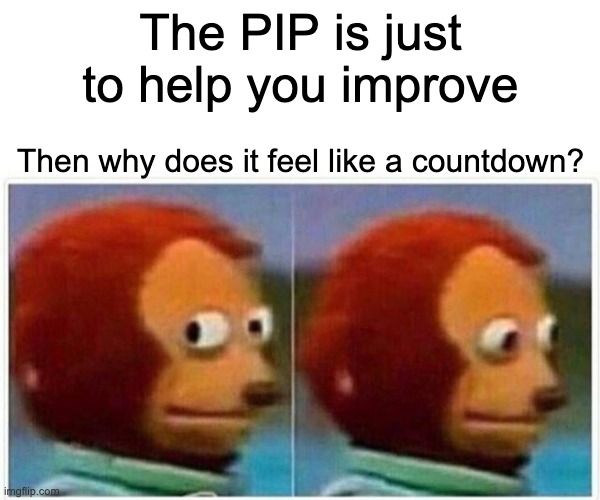 Performance improvement plan meme
The Hard Truth About PIPs
Most managers want to see their people grow. You invest time, coach them, give them chances and hope that people improve. That’s when things get tough. At some point, a structured intervention like a PIP becomes a necessity. You want to be fair and do what’s best for the business. Here’s what makes PIPs so damn difficult:
Delaying the inevitable
Hope is a hell of a drug. Many managers put off PIPs, thinking maybe just one more conversation will fix things. But the longer you wait, the worse it gets. High performers start resenting the double standard. All of a sudden,it’s not just one underperformer dragging the team down but it becomes a whole culture issue.
The emotional drain
You’ve spent months, maybe years, trying to help this person. It’s frustrating when they don’t or in many cases won’t step up. Nevertheless, a leader provides clarity and sets expectations. You can care about people while still making the tough calls.
Toxic fallout
Not everyone handles a PIP professionally. Some disengage. Others spread negativity. And if you’re not careful, that negativity infects the team. Your job requires both fixing underperformance and protecting your team from it. Be mindful about it. I have seen cases where the underperformer spreads bad news and gossip.
HR and legal landmines
Unfortunately, A PIP isn’t just a “Hey, you need to improve” conversation. You need a structured process with documentation, fairness, and legal considerations. That’s why you need your HR partner. They need to make sure you are doing and following the process right.
Remember PIP is about clarity. It’s about giving someone one last shot while ensuring fairness for the team and the business. And as a leader, it’s your job to make that call, no matter how uncomfortable it gets.
When to Initiate a PIP
Deciding when to put someone on a PIP is never easy, but at some point, you have to stop second-guessing and make the call. I’ve found that the decision becomes clearer when you have solid indicators. If you’re stuck wondering “Should I?”, here’s what I look for:
- The same performance issues keep coming up, despite clear feedback. I once had an employee who kept missing deadlines. We talked about it. I laid out expectations. I even helped them break down their tasks. Yet every time, the same thing happened: excuses, apologies, and another missed deadline. At some point, you have to stop hoping and start holding people accountable.
- They say the right things but don’t take action. You know the type. They nod during feedback conversations, agree to improve, and then… nothing changes. Maybe they’ll put in extra effort for a week or two, but then they’re right back to square one. If someone isn’t taking ownership, no amount of coaching will fix that.
- You’ve already made accommodations, and they still can’t meet expectations. Lowering the bar isn’t the answer. If you’ve given them extra time, training, or adjusted their workload, and they still can’t perform, the problem isn’t the circumstances. Unfortunately, it’s them. Keeping them around just drags the whole team down.
- They’re affecting the team in a negative way. Performance issues are one thing, but attitude problems are a whole different beast. Maybe they complain constantly, blame others, or bring a bad vibe into meetings. If the team is frustrated, disengaged, or picking up extra slack because of one person, it’s time to step in.
- Their skill gap isn’t closing. Some people genuinely try but just aren’t cut out for the role. And that’s okay. But if months (or even years) go by and they’re still struggling with fundamentals, then keeping them around isn’t helping anyone, especially them.
I’m pretty sure there are other factors to consider here, but you also need to be mindful of what actually warrants a PIP and what doesn’t. You generally don’t want to mix two different issues. Behavior is one thing, not meeting expectations is another. If someone has lied or done something unethical, that’s different from missing deadlines. You shouldn’t lump them together. It’s best to talk with HR and let them decide what next steps are because these need to happen with company policy and jurisdiction laws.
If your direct report isn’t responding to feedback, start documenting everything, what was said, what actions were taken, and how they responded. HR will want a clear record of the issues and the specific indicators that led to the decision.
Best Practices for Managing a PIP
Here a few practices in my mind that can help you go through PIP process better or start one.
- Go to HR, engage HR early and consistently
- Talk to HR early. Don’t wait until a PIP is the only option.
- Be prepared. Understand the process and what’s required.
- Ensure fairness. HR keeps things fair and legally sound.
- Use their support. They can guide both you and the employee.
- Set Clear and Measurable Goals
- Define measurable work, tie everything to metrics when you can.
- Talk to your employee about what success looks like.
- Maintain a Professional and Neutral Approach
- You want them to make it but avoid emotional investment in the outcome.
- Focus on fairness so double down on performance metrics and solutions.
- Document Everything
- Write down every meeting, progress update, and discussion.
- Share what you have recorded with your employee. Be transparent.
- This protects both the company and the manager in case of disputes.
- Communicate with your Team
- PIP is confidential. You also need to ensure that the broader team does not suffer from the impact of an underperforming member.
- Set boundaries on negativity and unprofessional behavior. Intervene when needed.
- Dealing with Last-Minute Performance Spikes
- Sudden improvement at the end of a PIP is common but often short-lived.
- You need to ensure sustained progress by requiring consistent performance beyond the PIP period.
- Without consistent performance, don’t call it a success.
- Be Prepared for Any Outcome
- Many fail to improve, be prepared.
- If termination is inevitable, make it happen respectfully and professionally.
The Manager’s Growth
I think a PIP is one of the toughest tests for a manager. It comes with a heavy burden. Preparing the document, aligning with the employee, running it, tracking progress. Oh man, it’s a real hassle, but it has to be done. Honestly, I wouldn’t wish it on anyone. Been there, done that. But sooner or later, you’ll have to do it. Here’s what you take away from it:
- Act early. Waiting too long only makes things worse.
- Detach emotionally. Care about people, but don’t let it cloud your judgment.
- Write everything down. If it’s not written, it didn’t happen. Rely on messages or record your feedback on 1:1 doc.
- A strong team requires accountability, if they don’t deliver, they won’t make it.
- Don’t sugarcoat the problem, it only delays progress. I heard it so many times "I didn’t understand I had performance problems". Be as direct as you can.
- PIP has real consequences for failing it, make it very clear.
- Stay consistent. Nothing kills team morale faster than unfair treatment.
Alternative Approaches to PIPs
PIPs have a reputation. And let’s be real—most people see them as a slow march to the exit. But there are other ways to handle underperformance. Sometimes, a different approach makes more sense for both the employee and the company.
Voluntary Exit Packages
Dragging out a PIP for 45, 60 or even 90 days when everyone knows how it’s going to end? That’s kinda painful for everyone involved. Sometimes, it’s possible to skip the whole song and dance and just offer a voluntary exit package. No stress, no drama. It’s a clean break. If someone knows they aren’t going to turn things around, this can be the best option.
Role Adjustments
Not every underperformance case has to end in termination. Some people struggle not because they lack talent, but because they’re in the wrong role. Instead of firing them, why not reduce their scope and give them a real chance to succeed?
For Individual Contributors
I’ve seen it before. It happens when someone is promoted too fast, hired for the wrong role, maybe the job changed, or maybe they just don’t thrive in high-pressure environments. Instead of watching them fail, why not shift them to a role where they can actually win?
This is typically a demotion in their role, but that doesn’t mean they can’t go back. With the right coaching, they should be able to climb back up when they’re ready. The important part is them being ready.
For Managers
Management isn’t for everyone. Some of the best engineers get promoted into leadership because they were great at their craft. Nonetheless, that doesn’t mean they are great at leading people. And then? They struggle. They second-guess themselves. Their team suffers. If a manager isn’t cutting it, offer them if they want to go back to being an IC. Many will love this choice but they don’t think this is on the table. You can always lead from where you are even if you aren't a manager.
Another approach is to gradually reduce scope, especially when a manager steps into a bigger role after someone leaves. Maybe they took over another team, and suddenly, the demands doubled. You know they’re not quite ready to delegate, set up teams, or handle the bigger-picture responsibilities yet. And it’s fine. It also doesn’t mean they can’t get there. Instead of letting them struggle or forcing a sink-or-swim moment, scale back their role iteratively. This gives them the space to develop while still contributing in a way that actually works.
Wrapping Up
You might not realize at first but PIP is about the entire team and the culture you’re building. It’s a test of your team, culture, and yourself. It forces you to balance empathy with accountability and patience with action. It’s a fine line. Avoiding it doesn’t help anyone; neither does rushing into it without a plan.
A well-run PIP puts structured opportunity for growth. It’s possible, I've seen it before. If an employee can turn things around, great. If not, the process ensures fairness, clarity, and a respectful exit. Either way, PIP reinforces a culture where performance matters and expectations are real and there are consequences.
I know no manager enjoys running a PIP, but at some point, you will have to. And when you do, remember: act early, be direct, document everything, and stay consistent. Whether the outcome is improvement or an exit, the goal is the same – a stronger, healthier team.