
When I was preparing for the college entrance exam, I wanted to study computer science because I had watched The Matrix. Yeah, I know, it’s not a big story. The other thing I learned was that computer science involved math, and I was good at math. Beyond that, I was far from being a computer guy.
I wanted to study at Bilkent University. That was my only choice, really. It is a private university, and I needed a scholarship. Fast forward to the exam, and I couldn’t cut it. To get in with a scholarship, I needed to be among roughly the first 500 people out of two million students. I was closer to 1,000, not 500, so I was upset. Very upset.
My entire family wanted me to become a medical doctor. With my ranking, I could choose any medical university I wanted, but not computer science at Bilkent. So I decided to go with medicine, but my dad suggested putting Bilkent first anyway. Every choice after that was a medical faculty.
A month later, I was at Bilkent. That year, enough people ahead of me had chosen different programs, so I got in. My dad’s last-minute suggestion led me to study computer science. The rest is pretty much on the blog now.
 When the career story is traced back far enough.
Something Went Your Way
Why did I tell this story? I don’t want to dismiss individual success, but I have come to a conclusion. It’s hard to explain success, or whatever success means in any context, without accounting for the overwhelming effect of luck. Taking luck seriously means admitting that something went your way. I have seen this firsthand many times in my life. The degree to which luck carries us is just insane.
I actually don’t know if luck is the right word. Some people call it destiny. The word does not matter much. Something happened that could easily have happened differently, and the rest of your life continued from there.
I think we assume that people have what it takes, and that is why they become successful at something. That may be true. They usually have talent, but many other people have talent too. We mostly look at the people whose decisions worked. We don’t see the others who made similar decisions, worked just as hard, and got nothing back. Once we know the outcome, the decision starts looking much smarter than it was at the time. When you see someone rise, whether in a career, in life, or however else success is defined, we underestimate how much luck is involved.
I still had to study at Bilkent. I had to learn, work, and do something with the opportunity. But none of that explains why this particular path remained open after I thought it had already closed.
Luck Compounds
When you are lucky enough to get one good job, it becomes easier to get the next one. When I got the job at AWS, it became much easier to get another job. I was in Türkiye and required visa sponsorship. Only a handful of companies offered that. AWS was one of them, and it opened more doors later. Being at AWS early definitely looked good on my CV. So this created a path that otherwise might not have been possible.
But how did I get there?
I studied at a prestigious university where people around me were also getting similar jobs and they were competitive. I remember solving Topcoder problems, which obviously helped me get into better shape for algorithms and data structures.
How did I get to that university? That goes back to how I started, right?
So it compounds. People often see luck as a point in time, but it is not. The first break does not stay where it happened. One good outcome changes what becomes available next. It becomes experience, reputation, and evidence that someone else can use to give you another opportunity. After a while, the humble beginnings fade, and the career looks as though it was planned but it wasn’t.
The opposite compounds too. A bad first job, a rejected visa, a health problem, or entering the market at the wrong time can keep narrowing the next choice long after the original event has passed. Later, the result may look like poor judgment or lack of ambition. Sometimes shit lands at exactly the moment that ends up defining the rest of someone’s life.
Different Lives Have Different Costs
We also have different lives, different health, and different people around us. Some people are lucky enough to encounter people they grow with, while others encounter people who make them stagnate or go downhill. I’ve been on both sides, so I know what each feels like. That also paves the road for what comes later.
I have friends I have asked for help when I needed it, mentally and financially. That is a privilege, and it is luck too. I value those friendships, but I cannot pretend I planned exactly who would enter my life or that they would be there when I needed them.
If you’re constantly struggling in your personal life, you won’t do any better in your professional life. A bad period can remain temporary because someone helps you before it spreads into everything else. Another person may be just as capable, but failure costs them more because nobody is there to absorb any part of it.
We may later call one person brave and the other cautious. Often, we are looking at two different support systems and describing the difference as character. Even effort does not start from the same place. One person can spend most of their energy on the work. Another spends half of it keeping their health, money, or family from falling apart, then gets judged by what remains. Support systems handle external weight, but internal capacity is just as subject to the draw.
Some People Start the Day in Debt
If you have a chronic illness of any sort, it becomes a problem in your career. You can obviously take measures against it, but it will still be there.
From a young age, I dealt with ADHD, and my attention span was naturally short. I tried to counter it consciously by forcing myself to play chess, an effort simply to practice sustained focus. I don’t know how much it actually changed my cognition, but it was an explicit energy tax. I had always spent extra effort just to get to the same starting line.
Sometimes the tax is even higher. Having a sick child alone can devour whatever success you think you have built. Nothing more. That’s it. You did not suddenly become less talented or disciplined. The cost of your life changed, and your energy had to go somewhere else.
Nobody Remembers the Wind
When people look back after becoming successful in life, they often feel that they deserved it. I have felt that too, although not as much anymore. But then you realize how many things had to go well to get you there.
Work leaves a bruise; good fortune leaves no mark. You remember the effort because it cost you something, and the fires because they demanded your attention. But the wind at your back is not loud and quiet things are easy to edit out of the story. You’ve built your life from the friend who showed up, the company that sponsored your visa, the choice your father insisted on, the body that held together under stress, and the disaster that passed you by.
So when you look at people who did better, look at the conditions you were in and the conditions they were in. They were never the same. This isn’t a defence mechanism. It is refusing to treat two different lives as a controlled experiment.
Envy works because we compare the results after removing everything that produced them.
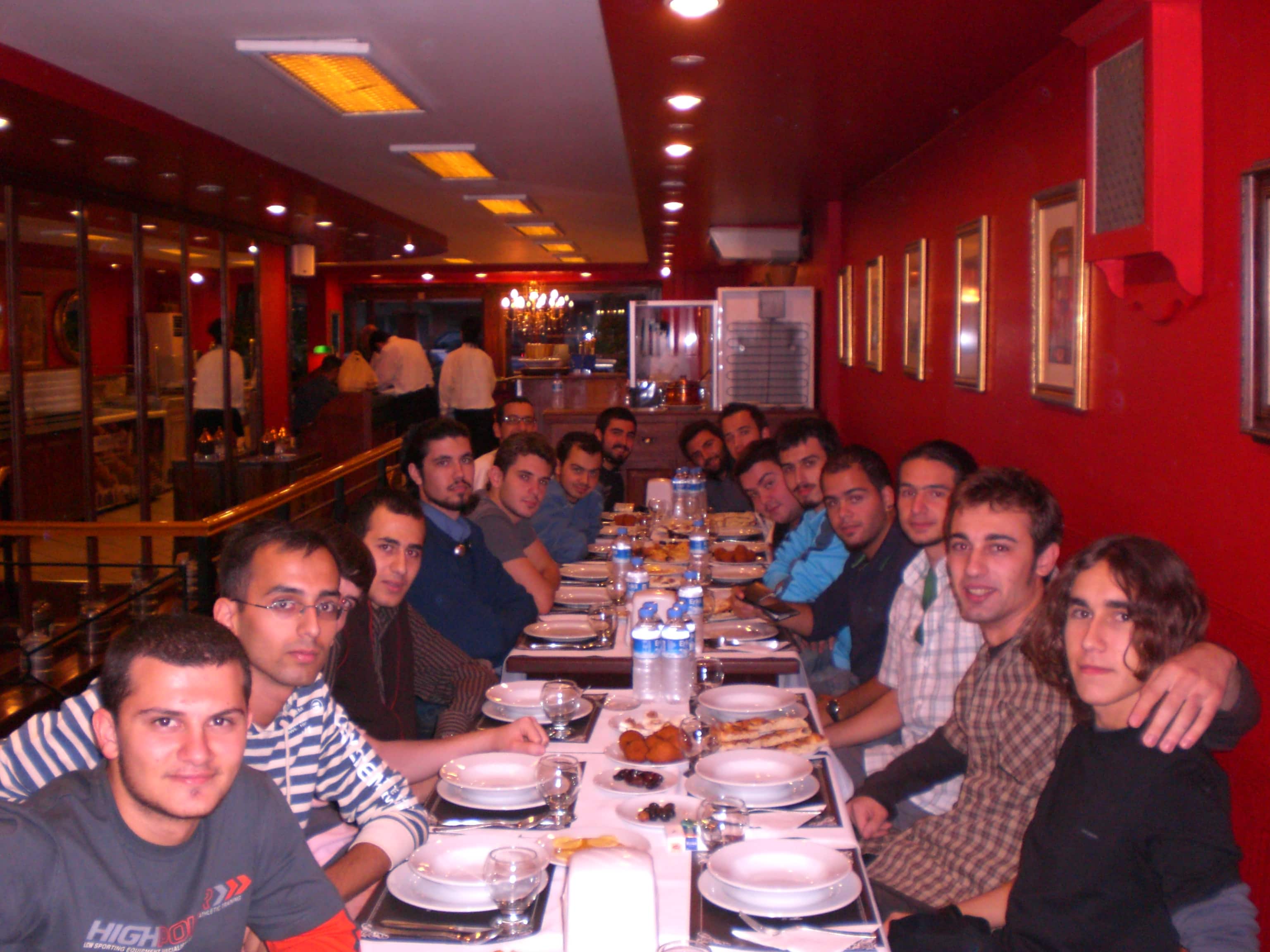 Bilkent Computer Science 2000s