
There are plenty of skills you can pick up along the way. Some come from books, some through experience. A lot of it is just trial and error. And some from self reflection. You figure things out such as writing a better email, managing your time, and so forth. If you’ve done even a little research, you’ll hear the usual suspects: communication, delegation, leadership, productivity.
They’re all valid. But obvious.
Recently, I’ve been thinking about what are some non obvious things that I should care about. The subtler things. The ones you don’t learn from a course or a manager. The ones that shape how your day feels, how others interact with you, and how much friction exists between you and your work.
I don’t actually think these are skills. They’re not something you list on a resume or get formal training for. They feel more like patterns you start to notice, especially when they’re missing. Thinking about it now, there are a few I’ve seen in others and in myself. They’re subtle, but they matter. I’ll try to talk through a few that stand out.
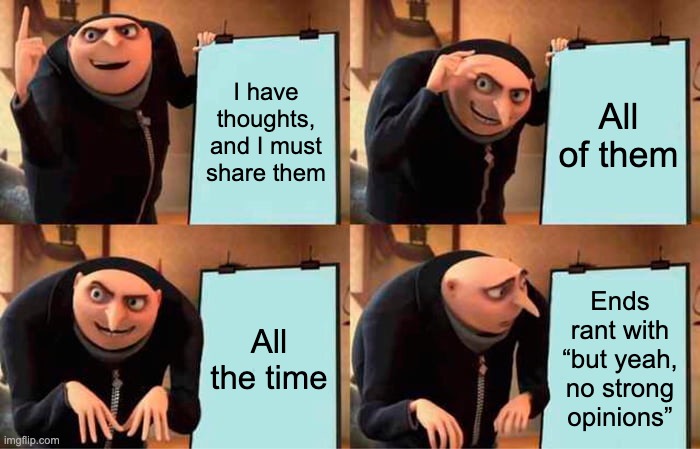 Gru overexplainer energy meme
1. Genuine Likability
I don’t know how this happens exactly, but some people are just genuinely likeable. You know the type. You almost catch yourself saying, “You can’t hate that guy.” They’re not trying too hard. They’re not loud or overly charming. There’s just something about them that makes things easier.
Where does that come from?
I’ve thought about this. And while I don’t have a perfect formula, I think it comes down to a few things: being approachable, being reliable, liking other people and somehow making hard situations feel lighter.
They don’t dismiss problems, but they soften the edges. They’re the kind of people you want around when things go sideways. They’re kind. Not the polished or overly sweet kind, but the kind that feels real. The funny thing is, they actually like you for who you are. It’s a bit strange, honestly. But it works. They pick up on the small things, subtle clues, and somehow they notice the good ones. So you should be constantly giving both verbal and nonverbal signals that you like people around you or at least that you want to.
A warm and honest smile helps, but tone and presence matter too. What matters is how you make people feel: useful rather than inferior, as if you are rooting for them and the team.
2. Consistent Follow-Through
In a world full of overpromising and under deliveries, just following through can set someone apart. It sounds basic, but it’s surprisingly rare.
I have been fortunate enough to work with many people who are quiet but yet get shit done. Every time I asked them to handle something, they did it. No drama. No excuses. Just done consistently.
And over time, that builds something powerful: reputation. You hear other people say it too, “If he’s on it, it’ll get done.” There’s a kind of quiet trust that forms around people like that. Not because they’re loud or pushy, but because they’ve proven they don’t drop the ball.
If you’re in any sort of leadership role, you end up relying on those people more. Not just because they deliver but because you don’t have to follow up. You can let go. That’s one of those things I always tell my folks, I’d like to be in the “fire and forget” mentality. If I ask something, it’ll be done.
3. Staying Silent
I’m a loud person with a lot of opinions, and I talk a lot. Always have. Over the years, I’ve been trying to trim it down. I want to be more intentional with when I speak and how much I say. I’ve made progress, but I’m not there yet. Old habits, you know?
Why does it matter?
Because I’ve learned, slowly and sometimes painfully, that there are moments when holding back is more powerful than speaking. Letting someone else take the space. Not jumping in to fix, correct, or clarify. Not saying the thing that doesn’t need to be said.
Silence doesn’t mean you’re out of ideas. It means you’re choosing to listen. Or maybe you’re choosing peace over friction. Either way, it takes discipline. And I’ve come to see it as a kind of maturity. One I’m still learning.
4. Be Seen
I tell my team to connect with people not just inside their group, but beyond it. Different departments. Different functions. People a few levels up. You don’t need to network like a politician. But people should know your name. There should be some sense of familiarity when they hear it. That recognition doesn’t always pay off immediately, but it does over time.
A lot of engineers avoid this. They think, “What would I even talk about with someone at that level?” So they stay silent. Keep their head down. But then they wonder why no one knows what they’re capable of. Here’s the thing — how is someone supposed to know you exist if you never show up? How are they supposed to know you have good ideas if you never speak?
Doing good work is essential, but it isn’t enough. You don’t need to brag, but you do need to be present. Ask a question in a meeting, share context when it helps, or offer input when it’s thoughtful. These moments create visibility, and visibility creates opportunity. The real kind, not the performative kind.
5. Understanding the Context
Most people operate with blinders on. They see their own workload, their own priorities, their own frustrations but forget that everyone else has their own context too. I see this all the time. Someone pushes back on a request, and the assumption is they’re being lazy or uncooperative. But maybe they just lost two team members last quarter. Maybe they’re stretched thin and barely keeping it together.
Or someone makes a firm decision in a meeting, and it rubs people the wrong way. But maybe they’re a few layers above, managing things others can’t see. Maybe they’re under pressure you don’t know about.
Understand the dynamics around you: who actually makes the calls, who influences decisions quietly, and what kind of stress people are under. That context makes you less reactive, more patient, and more strategic. It isn’t always given, but if you pay attention, it’s usually there. In other words, you should go beyond your perception and improve your perspective.
6. Maintaining Composure
Alright. Let me be honest. This one’s not my strength. I wish it was. I’ve tried. I’m still trying. But I haven’t figured it out yet. I don’t have a poker face. I react. I blast. If something bothers me, it shows. I don’t hide it well. It’s on my face before I even say anything. And yeah, I usually say something too. I know it’s not great.
Why does this matter?
Because whether you like it or not, people read into everything. A sigh. A smirk. An eye-roll. And once you’ve reacted, it’s out there. It gives people more than they need. Your frustrations, your judgments, your tells. Suddenly, they’re seeing a version of you you didn’t mean to show.
Some days, I wish I could just sit there calm and unreadable. But here we are. Still, I’m learning. I’m learning that composure isn’t about being fake. It’s about being deliberate. It’s about deciding when to show emotion and when to save it for later.
People notice who can stay steady. Who doesn’t gossip. Who doesn’t escalate. Who handles tension without turning it into theater. And while I haven’t mastered that yet, I’ve started to see the value in trying. You should, too
A self reflection
I’m still figuring most of this out. I mess up. I talk too much. I overreact. I forget to read the room. But over time, these things have become more visible to me. Not because someone sat me down and taught me but because I’ve felt the friction when I missed them.
No one’s promoting a course on “how not to be annoying at work” or “how to not react like a maniac in meetings.” But maybe they should. Because it’s these subtle things. The energy you bring into a room, how you follow through, how you make others feel. They actually shape how you move through your work.
And the funny part? No one tells you they matter. Until they do. So yeah, I’m still learning. Still trying to hold back when I want to blast. Still reminding myself to step back, stay present, and maybe just shut up for once. But I’ve seen enough to know this stuff makes a difference.