
Have you ever been in an engineering discussion where someone starts pointing out all the ideals and how much the company sucks? Complaining about all the mistakes the company makes, how things are broken, and how they should be improved? Well, I have been there on many levels. Those are the moments when you truly understand the pain points, and that’s when meaningful discussions can start.
I think it’s good to have those discussions. There’s nothing wrong with pointing out flaws, but what do we do about them? How do we turn the criticism into action? Blaming the executives might feel cathartic (I’ve been guilty of it too), but what’s the path from the current reality to the ideals we envision? How do we inspire change in the right direction, and can we do that within our own sphere of influence? That’s what I want to explore today.
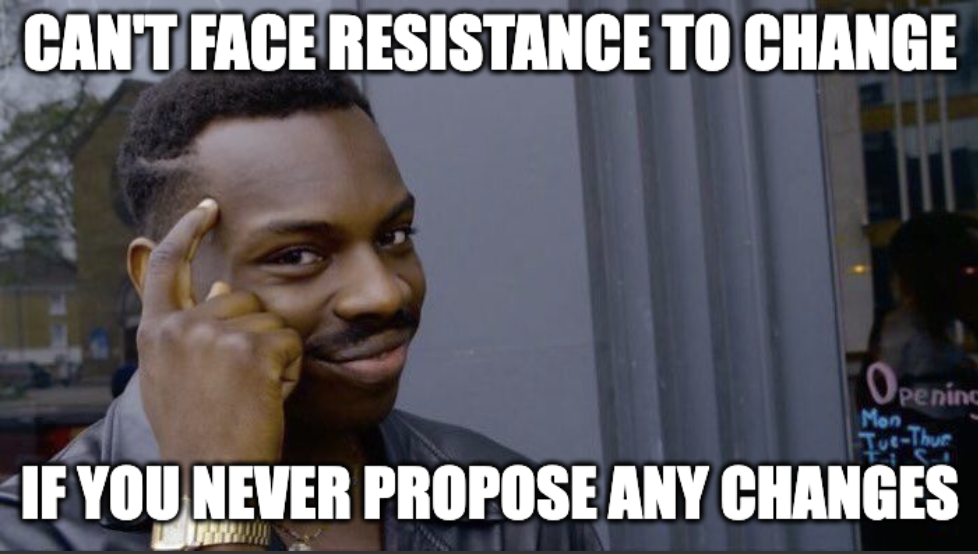 Can't face resistance to change if you never propose any changes.
Understanding the Story Before Criticizing
If you’re in a leadership position, it takes time to get a good handle on the story. Every company has its problems to a degree, but they’ve also achieved some success. They made it, and something is working. That’s why you are there. Yes, the technology may have flaws, and yes, the processes could be better, but whatever’s in place got the company this far.
Before you criticize, understand why people do things the way they do. Yes, we should automate more. Yes, we should fix root causes instead of just treating symptoms. But why isn’t that happening yet? Maybe the hiring wasn't aligned for the company’s growth. Maybe the initial team was strong enough to succeed even with imperfect processes, but those same processes are now failing as the company scales.
Before you judge a man, walk a mile in his shoes.
Once you understand the story, the next step is figuring out how to push for positive change within your own area. It may not feel like it matters because you’re just a cog in the machine, but it does matter. If you’re the cog that works well, the cog people can trust, then you can grow from there, perhaps influence a few other cogs, and start building momentum. I know it’s hard, but if you’re in any kind of leadership role, it’s on you to find a way.
Creating a Vision for Change
Creating change isn’t easy, especially when you’re trying to inspire positivity. One thing that’s important to understand: it's a long journey, and it won’t happen overnight. Start by understanding the problems. Have venting sessions with your team where everyone can express what’s frustrating without immediately trying to fix it. Once you have a clear picture of what’s broken, you can figure out the path forward – how to go from "completely messed up" to "less messed up," and from there to "actually pretty good." That’s how you build a vision.
You only control a small piece of the puzzle, and you’ll have people who are content with how things are. How do you change that? Start small. Find something you can make work really well. Make your small part of the system run smoothly, then use that as a proof of concept to influence others. Remember top-down changes are tough to adopt across a large organization, but smaller, grassroots changes are easier to implement and showcase. There will be people in positions of power who may not know the best way to improve quality, that’s fine, they might be there because they joined early or were good at something else. Be pragmatic: start with what you can control.
Vision without action is merely a dream. Action without vision just passes the time. Vision with action can change the world.
Joel A. Barker
Once you’ve implemented change in your own group, talk about it. If no one knows how well it's working, how can it spread? Encourage your team to share their success. Present it in meetings, record demonstrations, share results in public forums within your company. You want to create an example that others can see and want to emulate. Engineers love solving problems, and they appreciate innovation when it’s done well. If you showcase the positive impact, you’ll find others interested in your approach, and word of mouth will help spread your methods.
The next step is expanding your sphere of influence. Continue improving your corner of the company, and over time, the ripples will expand. Change takes time. A real change, especially on a large scale, can take many months or even years. My manager once told me that it takes at least six months for a second level plus manager to make changes effectively, and that’s with all the support and resources available. So, buckle up. It’s a long ride. But if you’re in it for the long game, and you know what you’re doing is right, you’ll eventually see the change you’re working towards. And that’s worth the journey.
Leading Change with Empathy
I believe one thing people overlook in driving change is empathy. Understanding the human side of things is just as important as understanding the technical challenges. People are not just gears in the machine; they have their motivations, fears, and pressures. When proposing changes, try to understand how they might feel about those changes. Is someone resisting automation because they’re afraid it might make their role obsolete or reduce their sense of value within the team? Is a team hesitant to adopt new processes because they’ve been burned by failed initiatives in the past? Empathy allows you to craft your message and approach in a way that resonates, creating allies rather than enemies.
Building genuine relationships within your group and across others can also make change easier. When people trust you and feel understood, they’re more likely to listen to your ideas. Invest time in one-on-one conversations within your group and outside, understand what drives each individual, and acknowledge their contributions. Empathy not only smooths the process of change but also creates a more resilient, supportive work environment.
Balancing Quick Wins with Lasting Impact
When you start working on improving and inspiring positive change, it becomes important to not to lose sight. A few jobs ago, I had to deal with an ETL issue. When I first got the job, nobody wanted to use the data my teams produced. Our customers were frustrated. Our data was often late, inconsistent, and unreliable. So, we started with data lineage. We brought in a tool to help everyone see how the data flowed. It had its faults, but it worked, and we celebrated that small win.
But the real problem was data quality. It took many iterations, but in the end, we did it. We implemented a certification process where data had to meet certain standards. Those early wins like getting visibility into the data kept us motivated, but the true victory was achieving reliable quality so our customers could trust it. There were moments I wanted to throw in the towel, especially when progress felt slow. But eventually, our data met customer expectations, and that was incredibly rewarding. Every customer started to use the data we were producing. It wasn’t flashy, but it made a real impact.
I think long term vision is like a hike. You climb up a hill with small wins, but you’re not done until you reach the summit. Celebrate small wins, but keep moving forward. Balancing quick successes with the bigger mission makes the journey worthwhile. In the summit, you get to sit and enjoy the scene with your food.
Overcoming Resistance to Change
Resistance to change is natural, especially in a company that has achieved a certain level of success by doing things a certain way. People often equate change with risk, and the fear of disrupting something that works can be paralyzing. Hence, overcoming resistance requires a mix of patience, persistence, and proof.
The first step is to acknowledge people’s fears. Instead of dismissing them, validate those concerns and work together to find solutions. Resistance often stems from a lack of information or past negative experiences. The more you can demonstrate that the proposed change has been thought through and tested, the more comfortable people will be. If possible, use data to show the positive impact. Metrics, case studies, and testimonials can help turn skeptics into supporters.
Another effective strategy is to get resistors into the change process. If someone is particularly resistant, give them ownership of a part of the project. They might not want it but find a way to motivate them with things like growth or influence. When people feel they have a say in how things unfold, they’re more likely to support the outcome. By turning critics into contributors, you build a stronger, more committed team. So, double kill!
Need for Rigor and Discipline
Meaningful change requires discipline. It's not just about doing things; it's about doing them with intention, adding rigor to everything you do. Discipline meant we needed to implement extra checks to ensure quality. It meant making sure processes are followed thoroughly. It was about holding ourselves accountable to our own standards. You know what? These small, consistent efforts are what make the difference between average and exceptional outcomes. Discipline requires consistent effort, even when it's challenging.
Progress takes time and discipline.
Ronnie Coleman
There were times during the journey when it felt exhausting to keep up the effort, especially when setbacks made it seem like nothing was changing. But it was precisely those moments when staying disciplined paid off. The consistency in our actions, even when results were not immediate, eventually led to real improvements.
Adding rigor means doing things right, even when nobody's watching. It's about setting high standards and pushing yourself and your team to meet them, even when it's tempting to cut corners. That discipline builds trust: trust in the quality of the work, trust in each other, and trust that the change will be worth it.
Discipline isn't glamorous, and it often lacks the instant reward we crave. But over time, the impact compounds. The changes we were striving for didn't happen because of one big breakthrough; they happened because of a hundred small, consistent actions. Discipline is what made those actions possible. It's about showing up every day, putting in the effort, and believing that the rigor you apply today will lead to better outcomes tomorrow. In the end, discipline and rigor are what lay the foundation for lasting change.
Wrapping it Up
Inspiring change in an organization starts with understanding where you are now before figuring out how to get to where you want to be. Start small, make one corner of the system run well, and let the results do the arguing for you. Behind every initiative are individuals with fears, motivations, and stories, so not everyone will be on board right away, and that’s okay.
The number that stuck with me is the one my manager gave: at least six months for a second-level-plus manager to make a change land, and that is with full support. If you are expecting it faster, you are measuring the wrong thing. The data quality work ran through many iterations before it counted, and it only counted once customers actually started trusting the numbers again.
It always seems impossible until it’s done.
Nelson Mandela