
Left home on Saturday and drove from Dublin, almost five hours in total. Made a stop on the way for some soup and the roast of the day, which was fantastic. Saved the place on the map, although I doubt I'll ever go there again. Eventually made it to the campsite, had a bit of a panic with the tent poles, but got the tent up in the end.
The campsite was amazing for the views, though. It sat right on the edge of the water, with the bay opening in front of us and mountains rising on the other side. From the tent, there was barely anything between us and the sea. So visually, it was probably one of the nicest places I could have picked. The downside was that it was very noisy. People kept talking and barbecuing until around 10pm, which would normally be fine, except we had to be up early and at Glen Pier by 7:45 the next morning.
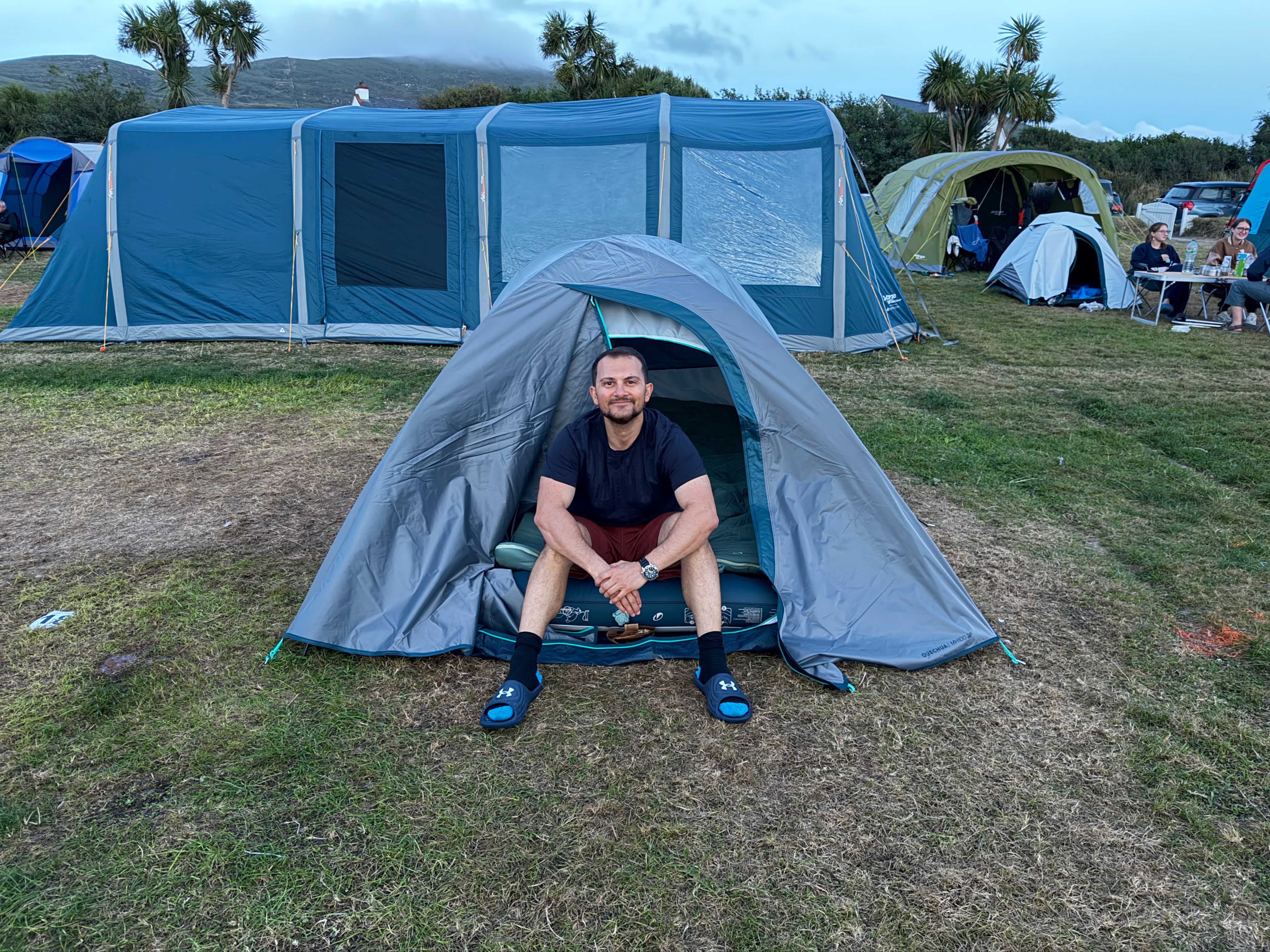 Camping near Skellig Michael before the early boat trip
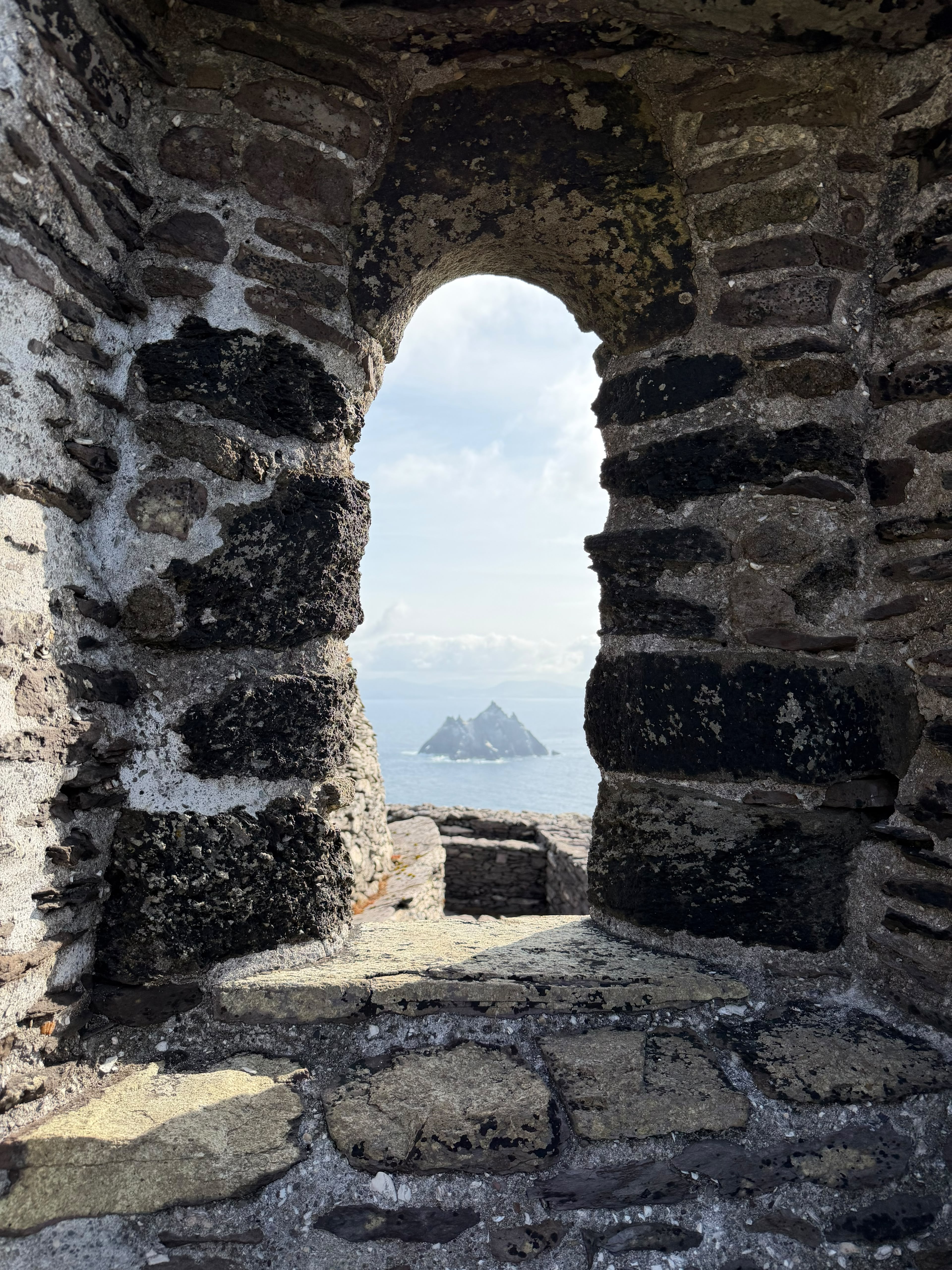
The next day, woke up early, folded the tent and headed to Glen Pier, which already has a view of Skellig Michael. The weather was calm, and the boat ride was one of the best things I've done this year, alongside Torres del Paine. It was bumpy, but really good fun. I think the bumps actually made it better. It felt like we were properly going somewhere rather than being ferried across. We first arrived at Little Skellig, which hosts thousands of birds. I really enjoyed looking at Little Skellig. There is something slightly unreal about seeing that many birds packed onto one piece of rock in the middle of the Atlantic. And thousands is one of those numbers that sounds abstract until you are actually beside the island and there are birds everywhere. After going around Skellig Michael's lighthouses, we passed the old lighthouse and the newer one further along the island. We were told about the damage caused by rockfall there, which made the whole road around that side of the island feel slightly absurd when you think about how it was built in the first place.
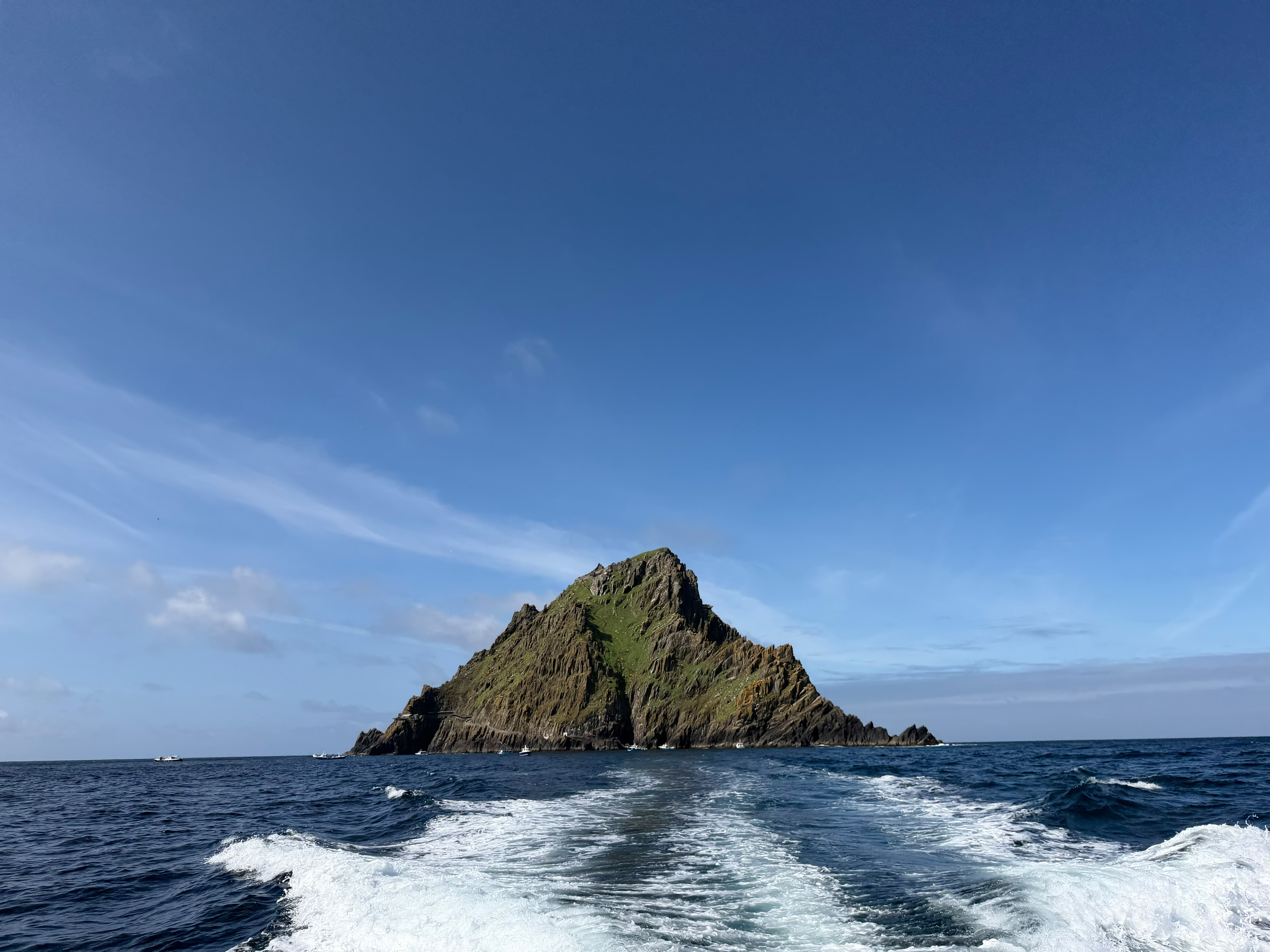
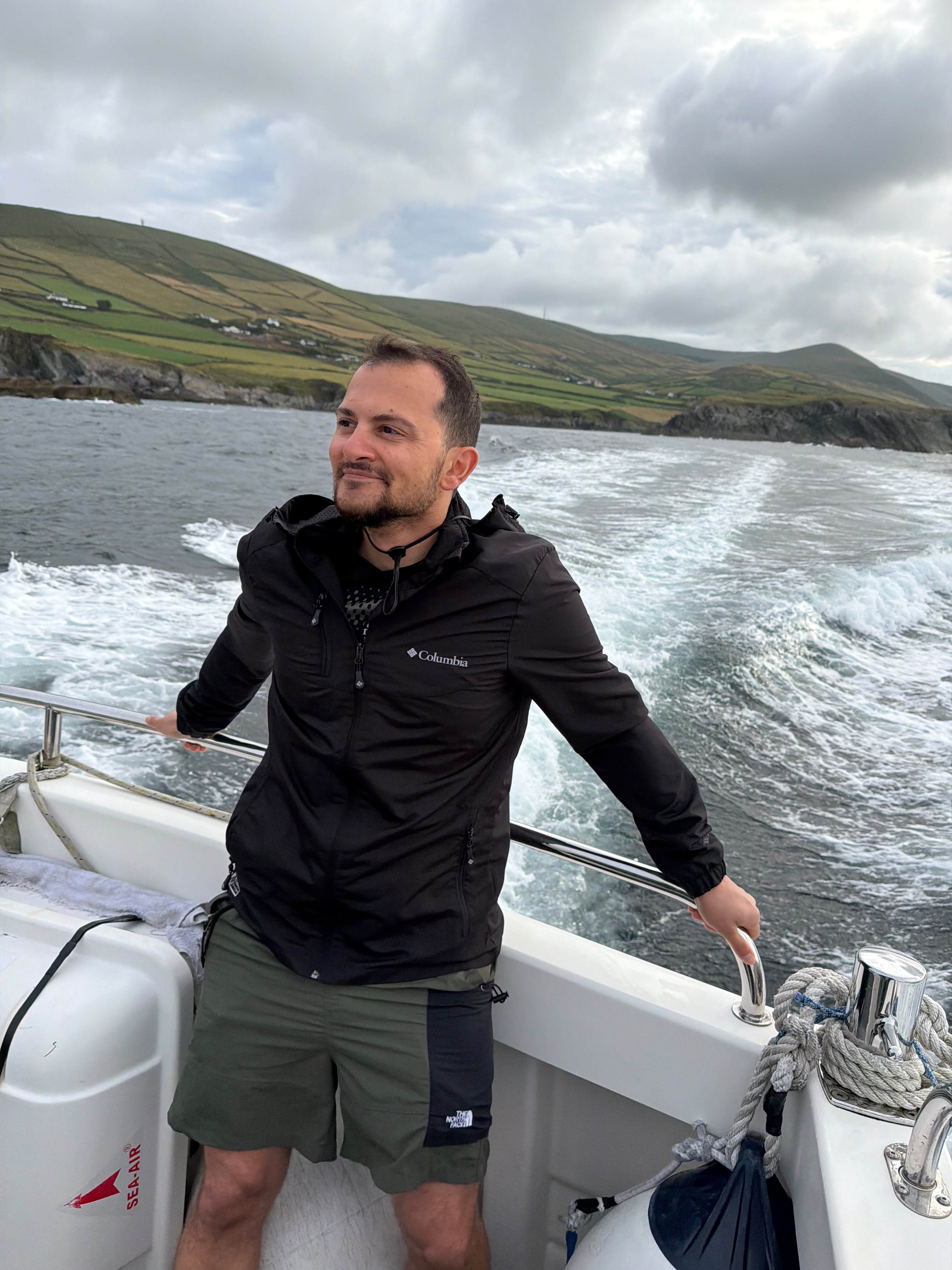
Then we landed on Skellig Michael. I wondered how monks made it here. It seems like an impossible journey. Even with a motorboat, modern clothes and good weather, getting there feels like an expedition. They were doing this more than a thousand years ago.
The guides talked us through some of the history of Skellig too. Obviously there were Viking raids, and apparently people even came out here to get married, among many other things I can no longer remember. What I do remember is that the guides had good banter, which probably helped.
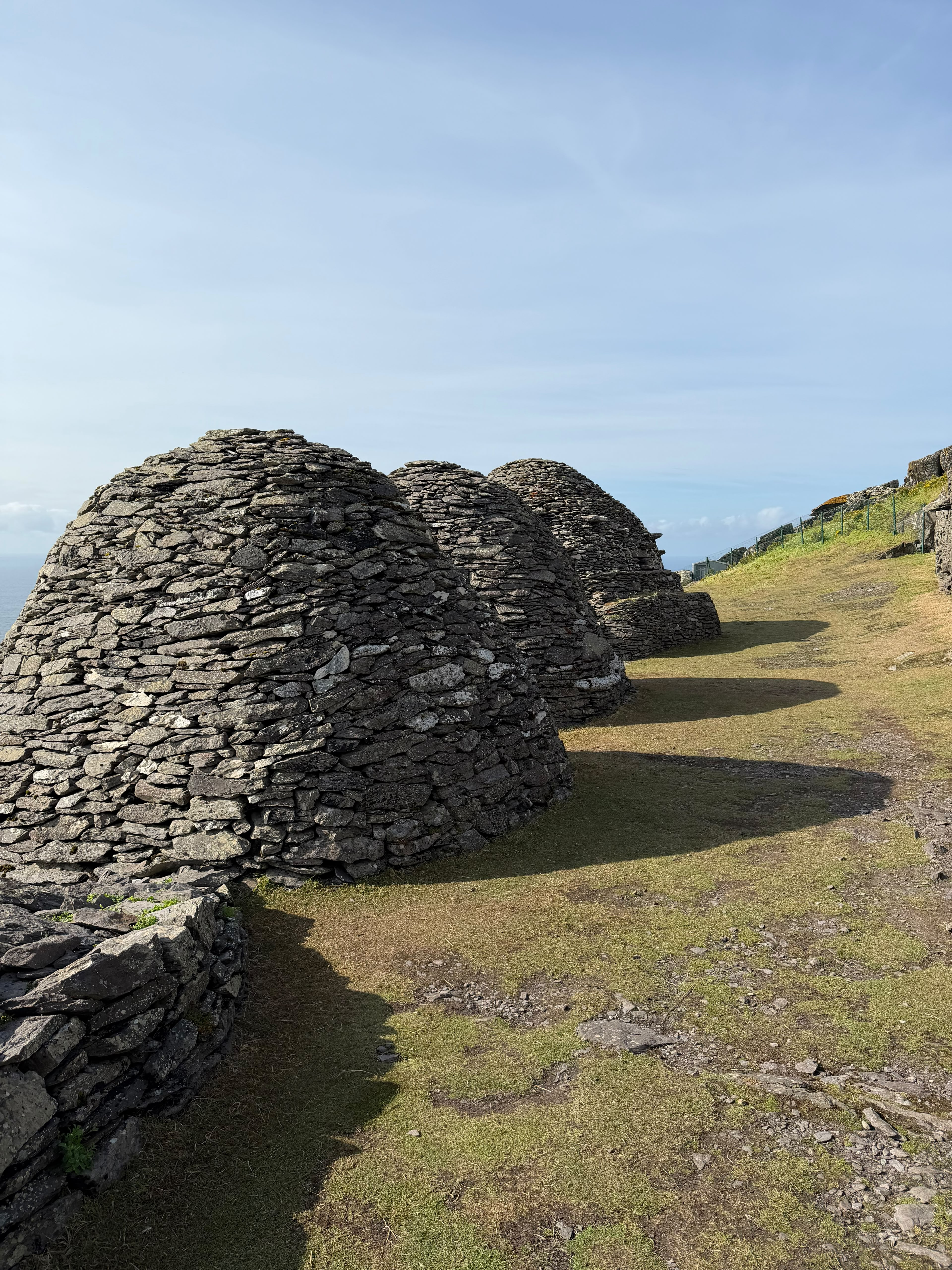
Anyway, I didn't have a hard time climbing the roughly 600 uneven stone steps up to the monastery, although some people had to use hiking poles. It was on those steps that we saw a puffin, which was a surprise this late in the season. We were probably about two weeks too late for them, as most migrate away by mid-August, but one was still hanging around. I couldn't get a photo because it ran away by the time I tried, but at least I got to see it. The monastery has the traditional Irish beehive huts. This was the part I had seen in photos countless times, but the strange thing is that the monastery itself almost becomes secondary once you are up there. You turn around and there is the Atlantic on every side. I got some really nice views from multiple angles. Every few metres seemed to give you another version of the island.
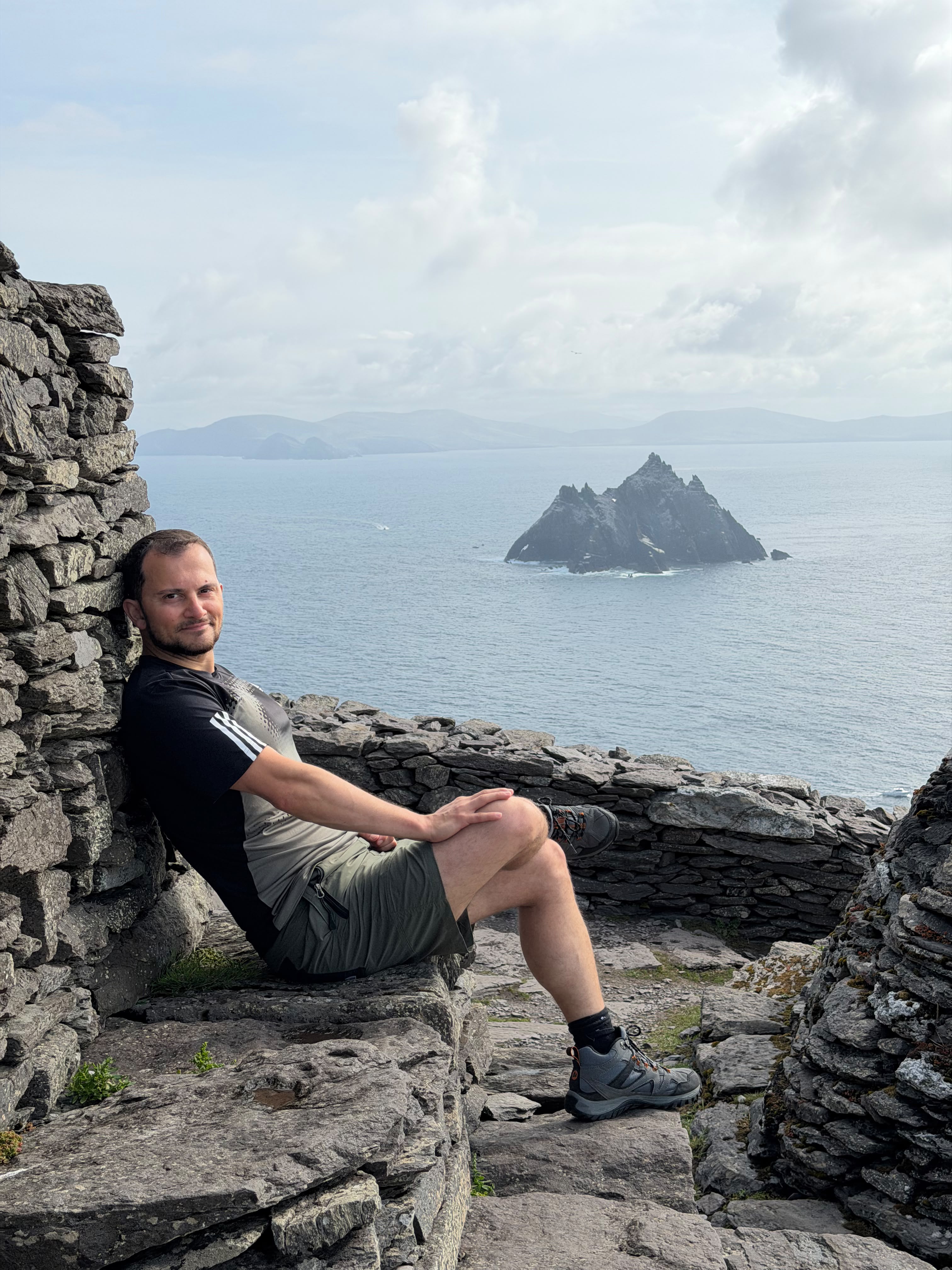
We spent around two hours there and then went back down the same way and took the boat back to Glen Pier. By then the journey back felt much shorter. I think once you have actually stood on Skellig Michael, seeing it disappear behind the boat is very different from seeing it from the pier that morning.