
Torres del Paine was easily one of the hardest and most rewarding hiking trips I have ever done. From the outside, it looks like one of those perfect dream adventures. Jagged towers, blue lakes, glaciers, open valleys, dramatic Patagonia weather. All of that is true. But what does not fully come across in the photos is how serious the commitment becomes once you enter the park.
This is not the kind of trip where you can improvise much once it starts.
We did the W Trek from east to west over 3 nights and 4 days, starting in Puerto Natales, taking the bus into the park through Laguna Amarga, and beginning from the Las Torres side. From there, the route was effectively locked in. The next camps were booked. The transport was booked. The direction of travel was fixed. If you are exhausted, you still have to keep moving. A bad decision early in the day costs comfort and energy you may need tomorrow.
That was the real character of the trek for me. It was not just beautiful. It was structured, unforgiving, and hard to recover once you were inside it. A big part of that was the terrain itself. The W Trek is not the kind of trail where you settle into an easy rhythm for long. Much of it is rock, uneven ground, loose sections, and constant small adjustments under your feet. For the first mile or two, that might not seem like a big deal. After that, it starts to accumulate. Your ankles, knees, and legs never really get a break, and that constant instability makes the hike feel harder than the raw distance suggests.
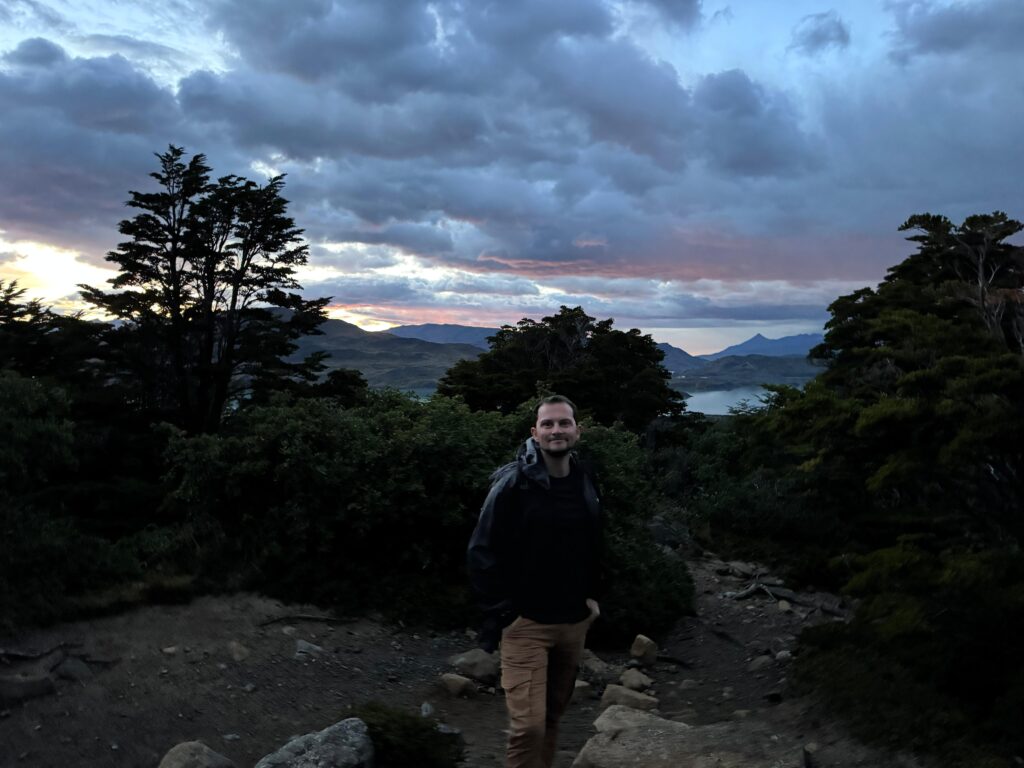
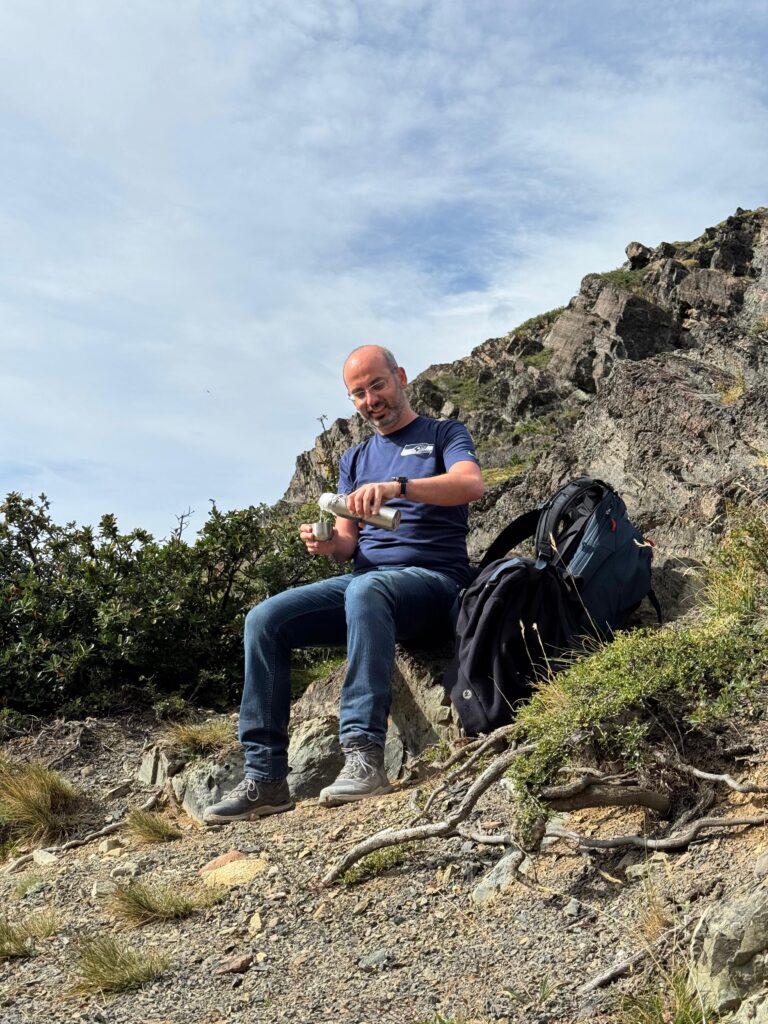
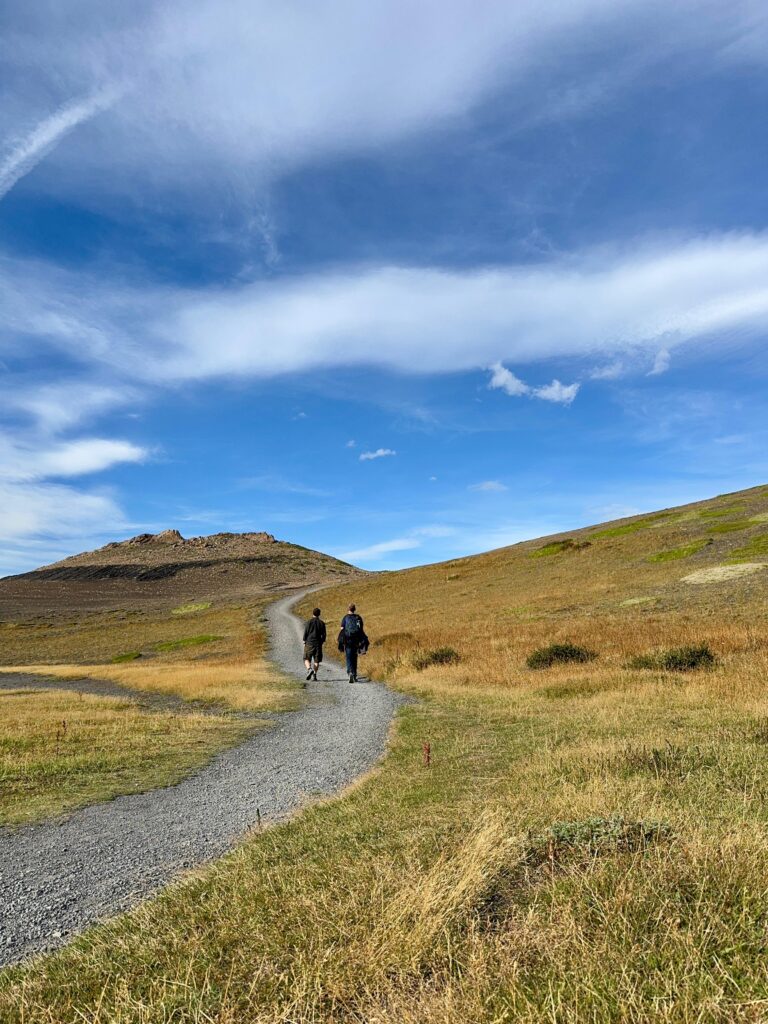
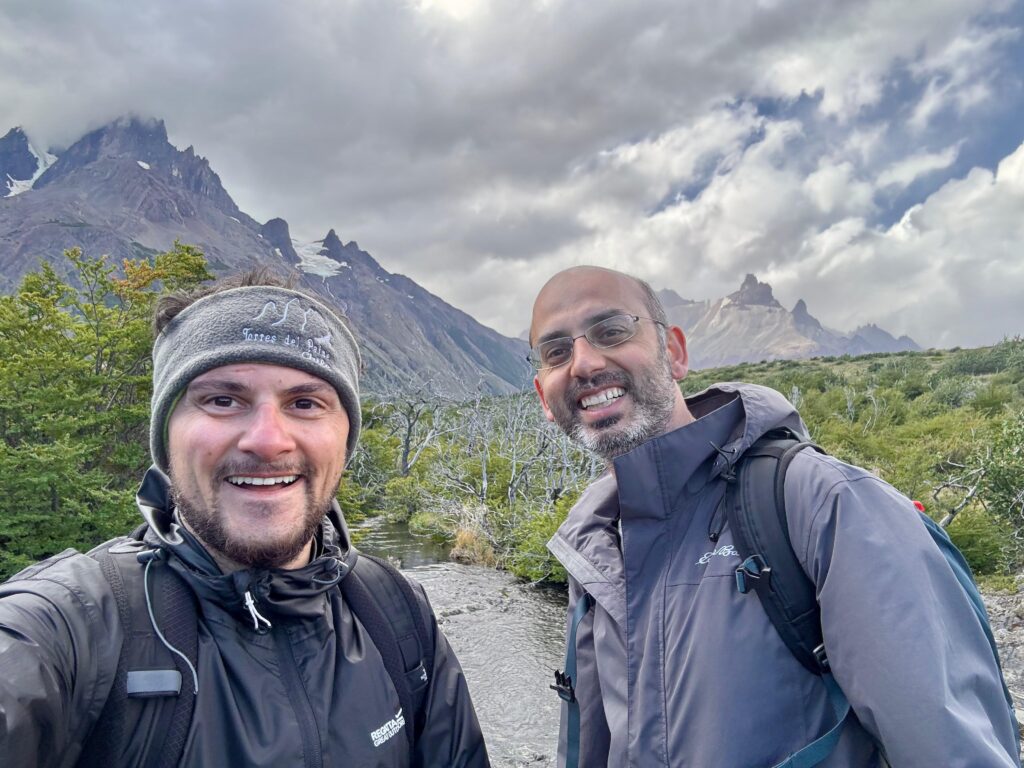 Torres del Paine W Trek view
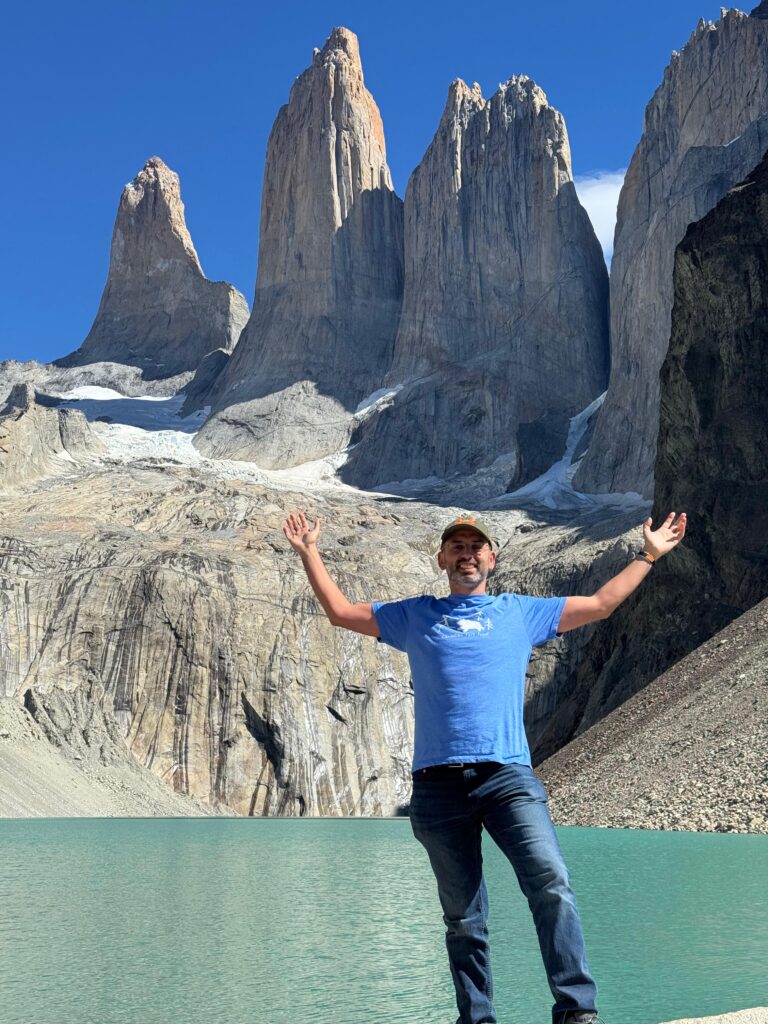
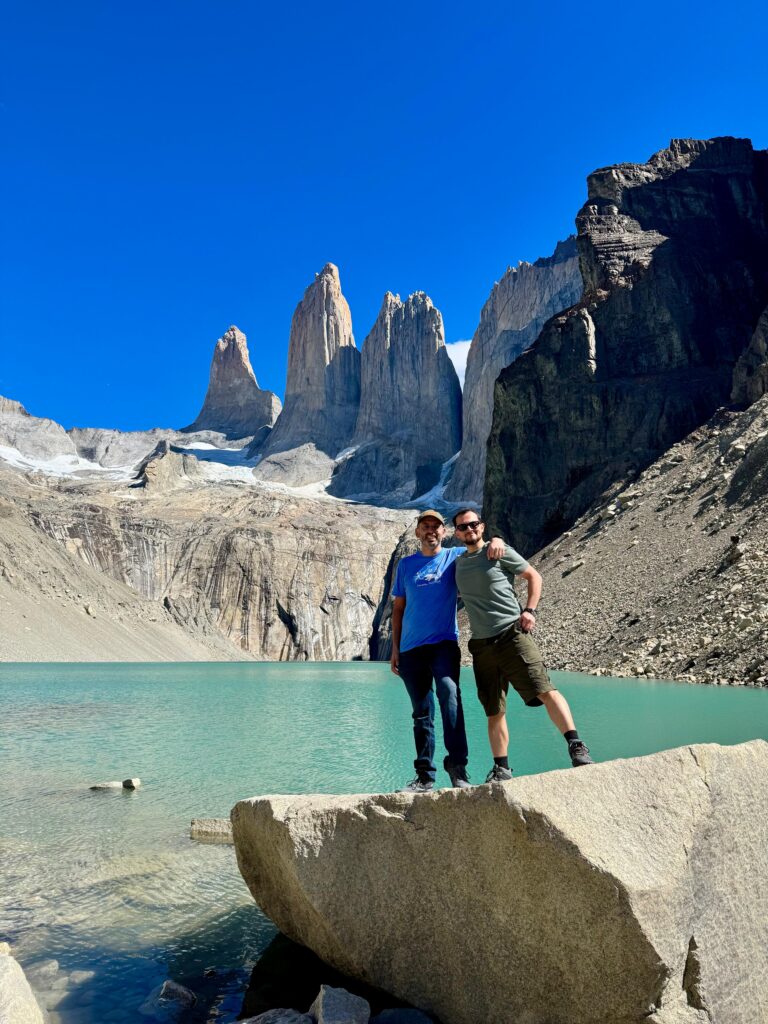
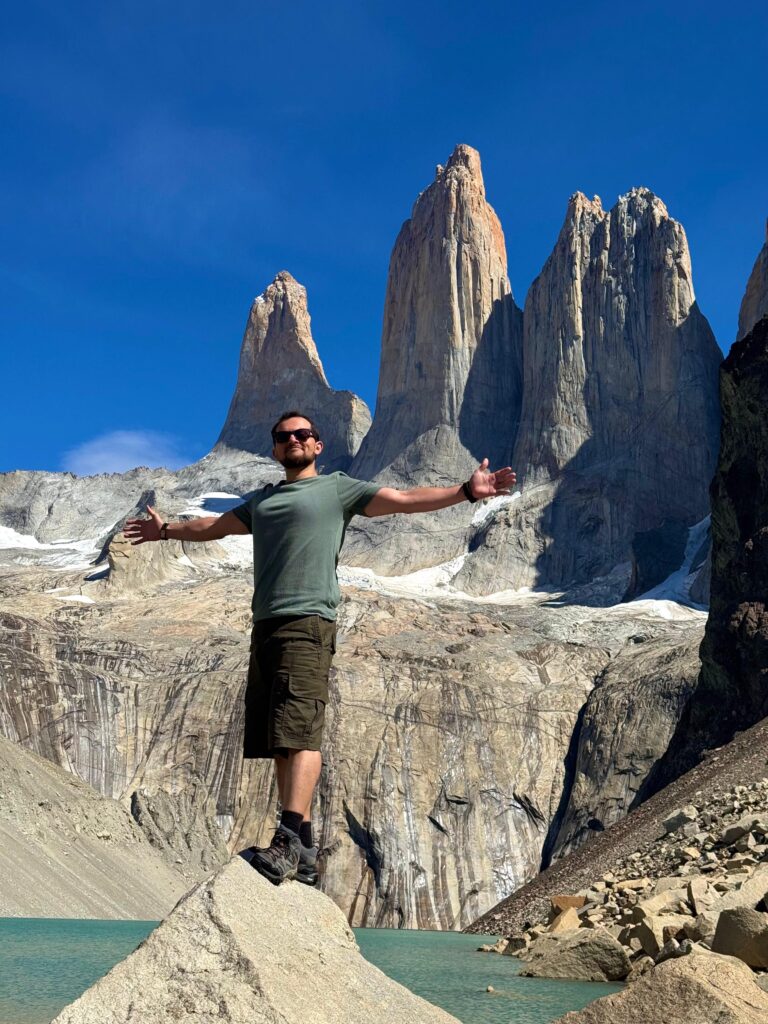
Day 1, Torres Base
The first day set the tone, mostly because we made two bad decisions right away. We skipped the shuttle because we underestimated how hard the day would be. Then we made the bigger mistake and carried our big packs plus all our food up toward Base Las Torres instead of leaving them behind. That turned a demanding climb into something much more punishing than it needed to be.
This is one of the clearest lessons Torres del Paine teaches. Small arrogance gets punished. Not dramatic arrogance, just normal tourist arrogance. The kind that says this should be fine, we can manage, it is probably not that bad. In easier trips, mistakes like that cost comfort. On this trek, they cost capacity.
The climb with the full packs felt brutal. At a certain point, the scenery stopped feeling like scenery and started feeling like background noise behind physical effort. Shoulders hurt. Legs hurt. The wind keeps working against you. Every step asks a small question about whether you really thought this through.
Then you finally reach the towers, and the answer becomes yes, it was worth it. But the cost was still real. That night we stayed at Refugio Chileno, already more aware that the W Trek does not forgive avoidable mistakes.
Day 2, Ascencio Valley
Day two took us through Ascencio Valley, past Los Cuernos, and along Lago Nordenskjöld on the way to Camp Francés. The landscape kept changing all day. Mountains, bright blue water, wide valleys, new shapes every few hours. Torres del Paine does this unusually well. It does not give you one great view and then repeat itself. It keeps reintroducing itself.
But physically, day two is where the accumulation starts to show.
The bad decisions from day one do not stay on day one. Your legs still remember. Your shoulders still remember. The pack still feels heavy. The trail becomes less about isolated effort and more about sequence. That is one of the deeper truths of the W Trek. What matters is whether the chain of days is doable under your actual energy level.
Day 3, Mirador Británico
Day 3 was the hardest day of the whole trek, mentally and physically.
We left our big bags at Italiano before heading up into French Valley toward Mirador Británico. Italiano is a very simple stop, not really a comfortable refugio in the usual sense, more like a basic shelter point where you can stay dry and leave your things. There is no real facility there, which somehow fits the mood of that day. It felt more like a staging point than a place to recover.
Even without the big bags, that day was absolutely brutal.
This is where I think people can misunderstand the difficulty of the W Trek. Distance is only part of it. The elevation, repeated ups and downs, and fatigue from the first two days make every mile harder. On paper, the mileage alone does not fully explain it. In reality, that day involved around 2,300 feet up and down, and that is what really broke the rhythm. The trail keeps taking from you in increments until you suddenly realize you are running on much less than you thought.
We also made it much worse by losing track twice. Even with GPS devices, we still descended too far into the valley and had to climb back up. That was one of the most demoralizing parts of the whole trek. When you are already tired, a navigation mistake does not feel like a small correction. It feels like the mountain is gradually stealing more from you.
By the time we got back down to Italiano from Británico, Ender was nearly broken. That was the real low point of the day. Not because the day was over, but because it was not. We had already pushed through the hardest section, already done far more than expected, and still had to pick up our bags and continue all the way to Paine Grande.
That is what made the day feel so relentless.
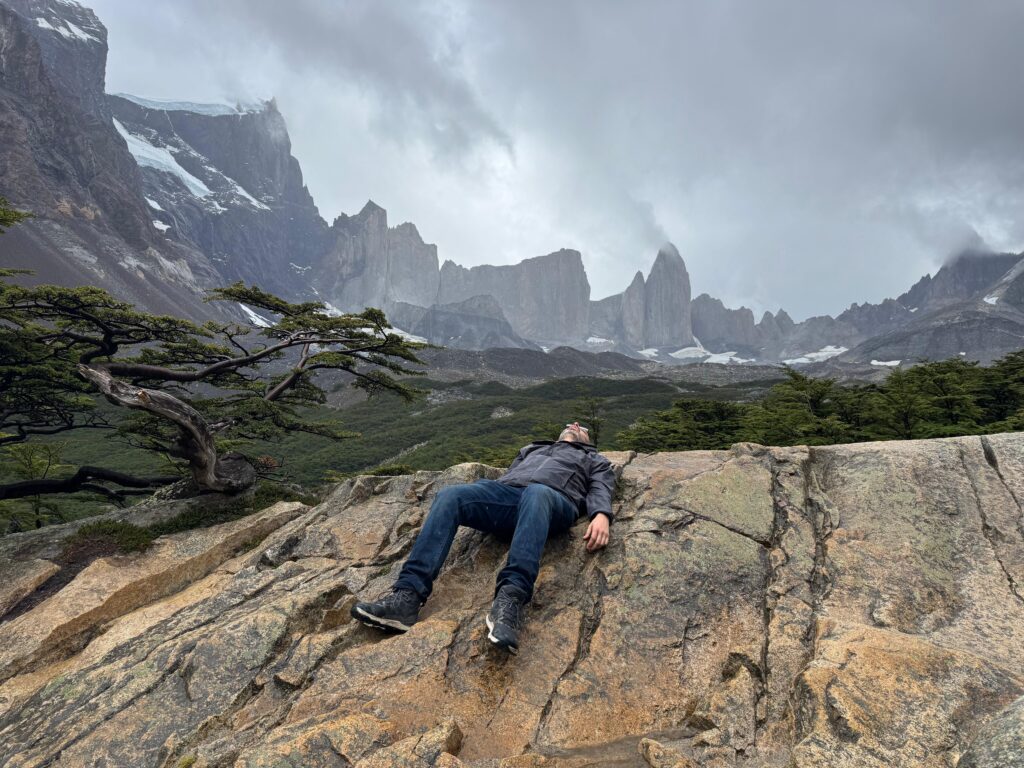
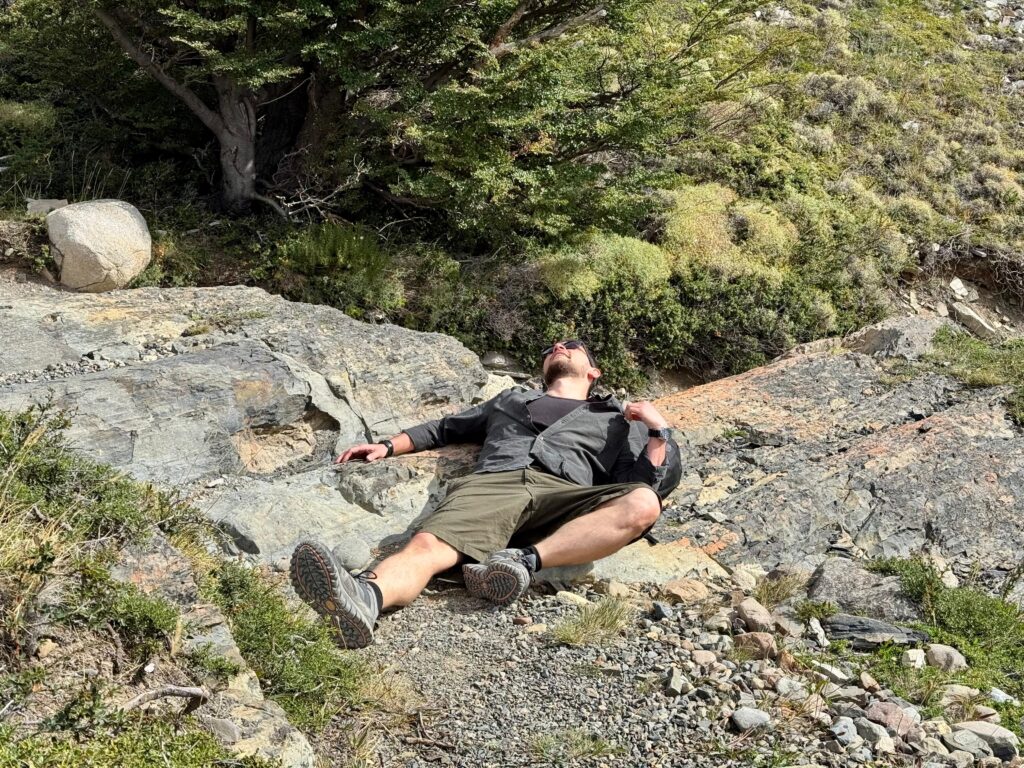
If getting back to Italiano had been the finish line, it still would have felt like a huge day. But it was only the midpoint in practice. We ended up doing around 15 miles that day, and by the time we were walking on toward Paine Grande, it felt less like hiking and more like pure obligation. The booking was there, the route was fixed, and there was no real option except to keep moving.
That was the moment Torres del Paine felt least like a scenic trek and most like a physical contract. The views were still unreal, but on that day the exhaustion was louder than the scenery. Once the hard part had already drained us, the trail still demanded several more hours.
Day 4, Grey Glacier
By the final day, we were exhausted, but Grey Glacier was the perfect ending. After towers, valleys, lakes, wind, soreness, bad decisions, and constant movement, ending with the glacier felt right. It had a different kind of scale to it. Less sharp than the towers, more cold and immense. By that point I think I was too tired to react dramatically. I was just grateful the trek still had something huge left to show us.
One of my favorite views of the whole trip was actually from the catamaran on the way out. Looking back at the glacier and the mountains after everything we had pushed through felt different from seeing them fresh. Effort changes landscapes. The same view means more once your body knows the price of getting there.
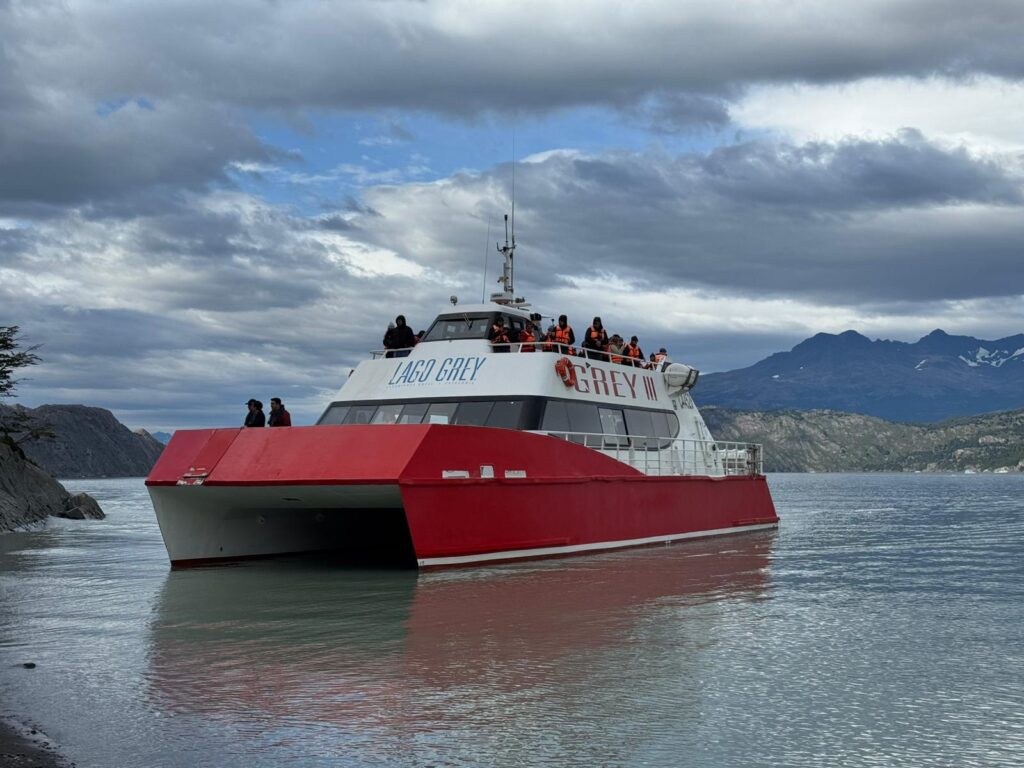
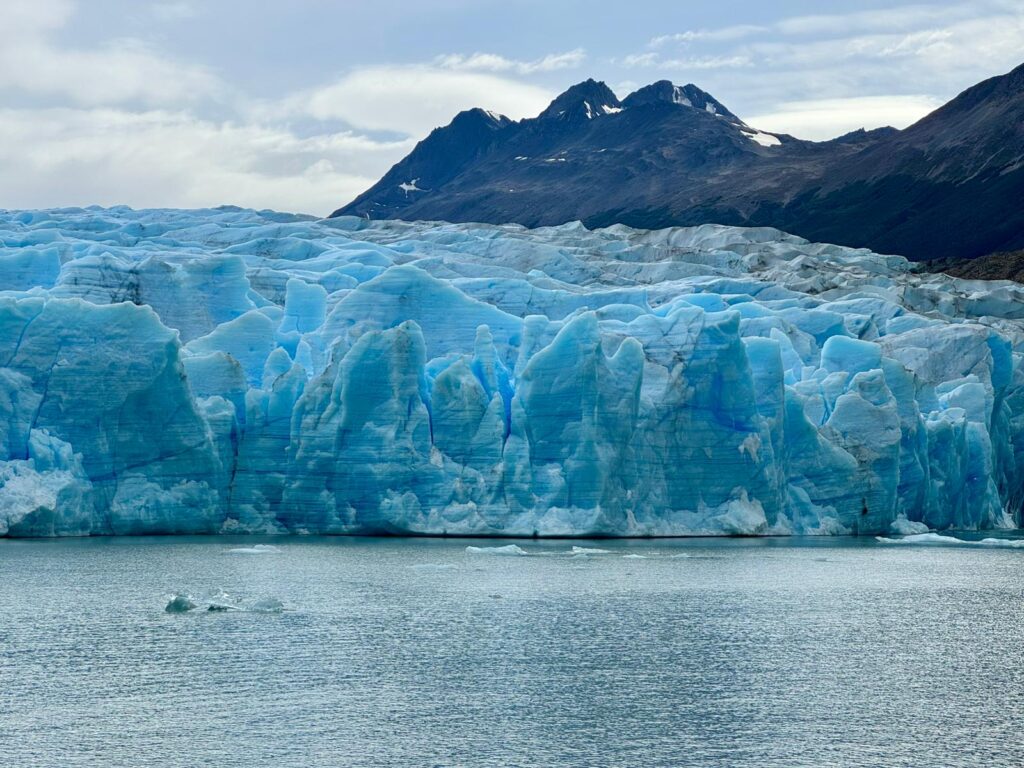
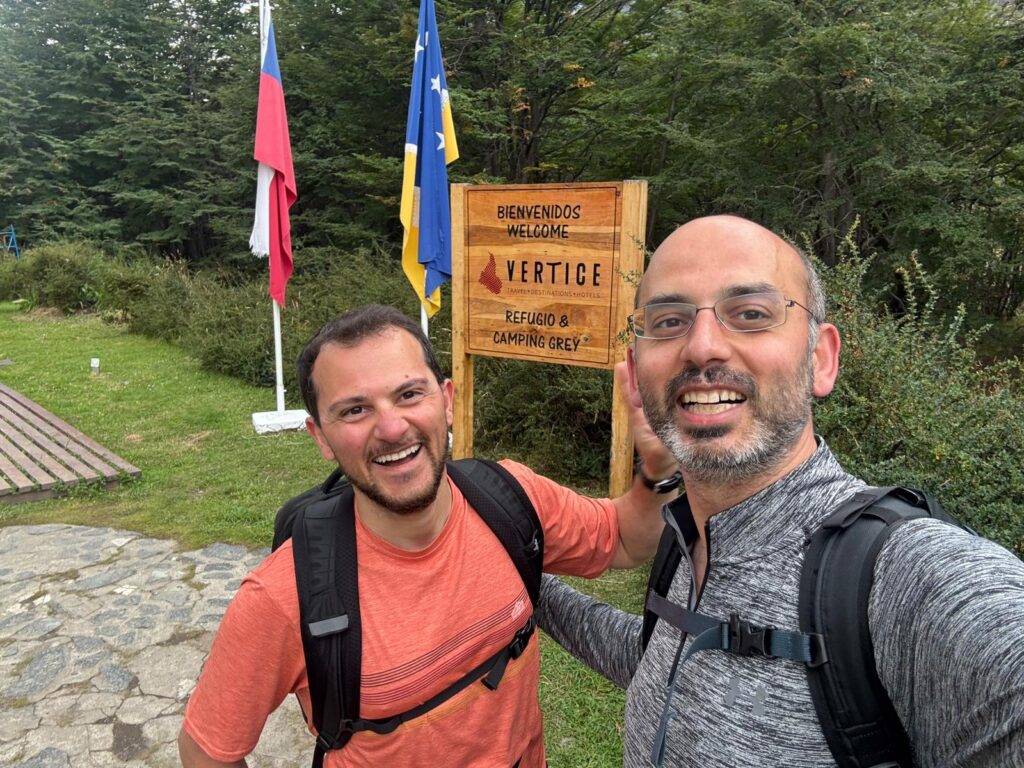
Morning Soreness
One thing I did not expect was how bad the mornings would feel. We woke up early every day, sometimes before dawn, and the first twenty minutes were rough. My whole leg felt completely sore. Not mildly stiff, properly sore. It took at least twenty minutes every morning for my body to adjust and for walking to start feeling normal again.
That changed the rhythm of the trek. Mornings were not fresh starts. They were recovery tests. You wake up, your body reminds you what happened yesterday, and you spend the first part of the morning trying to get functional again. That is one of the biggest differences between a hard day hike and a multi-day trek. You do not reset overnight. You accumulate.
The Pre-made Tents
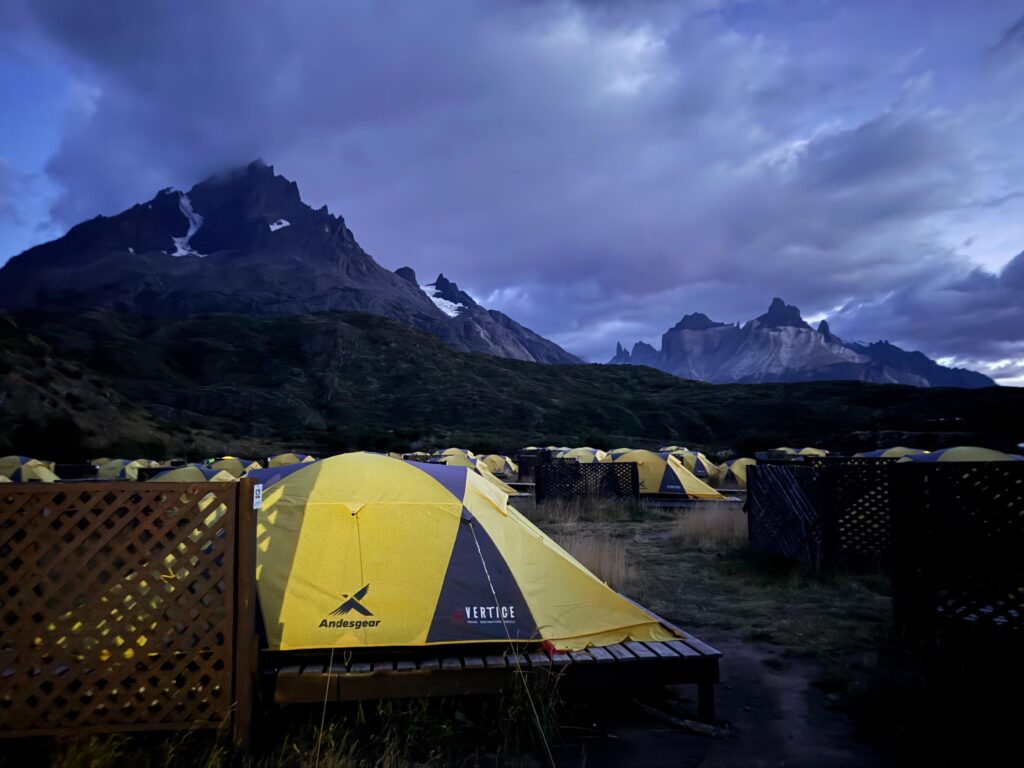
One thing that helped a lot, and that I would absolutely do again, was paying for the pre-made tents.
That probably sounds like a minor luxury until you are actually on the trail. After a full day of hiking in Patagonia, the last thing I wanted was to arrive at camp, deal with setting up a tent, organize everything from scratch, and then reverse the whole process early the next morning while my body was still wrecked. The pre-made tents removed that layer of friction entirely.
That matters more than people think. On a trek like this, every repeated task consumes energy. Saving effort at the end of the day leaves more energy for recovery. You already spend the day managing terrain, timing, weather, food, and fatigue. Removing one more operational burden was well worth the money.
 Campsite in Torres del Paine Patagonia
Food Shaped the Whole Experience
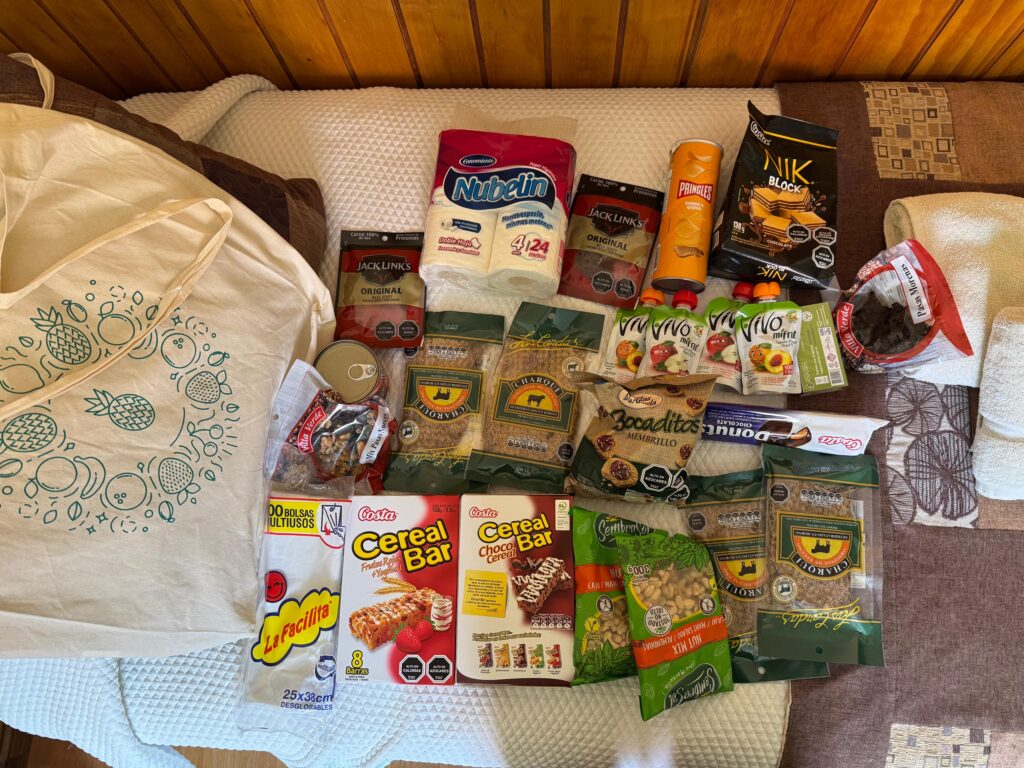
Before the trek, we laid out everything we planned to carry: beef jerky, nuts, dried fruit, bars, chips, crackers, juice pouches, sweets, and whatever else seemed easy to carry and easy to eat. It was not elegant, but it made sense.
That turned out to be one of the more important choices of the trip.
The refugios do serve food, but it is expensive, and dinner is usually at 8:15. That sounds manageable on paper, but in practice it means you cannot really sleep early even if you desperately want to. After a hard day, being tied to a late dinner slot is not ideal. By carrying our own food, we controlled our own timing. If we wanted to eat earlier, we could. If we wanted to keep moving and eat later, we could. That flexibility mattered.
The other issue was that, honestly, the food choices at the refugios were not that impressive anyway. You are paying a lot, waiting until late, and still not getting something that feels especially worth planning your whole evening around.
There is also a bigger logistical reality behind all this. Some of these refugios are supplied by horses. There is no proper road in the usual sense getting everything in and out. So of course things are limited and expensive. Once you understand the mechanism, the prices make more sense. But understanding why something is expensive does not automatically make it attractive.
Paine Grande is different, and so is Central, though we did not stay there. They have better access, which means they feel less isolated operationally. Paine Grande in particular had more of a small grocery and restaurant setup compared to the more remote feeling stops. That difference becomes very noticeable after a few days on the trail.
Need More Calories
Another thing that became very obvious was how much hungrier we were than usual.
That should not have been surprising. The hike is hard. Your body is burning through much more energy than on a normal day. But it still catches you off guard when you are actually in it. Food that would normally feel like a snack starts feeling operational. Salt matters more. Warmth matters more. Calories matter more.
On the third day, I made a kind of improvised soup from beef jerky. It was extremely simple, just pour hot water over it, but it tasted great. More importantly, it worked. After hours of hiking, something warm and salty felt disproportionately valuable. That is the kind of thing you remember on a trek like this. Not because it was sophisticated, but because it solved a real problem at the exact right time.
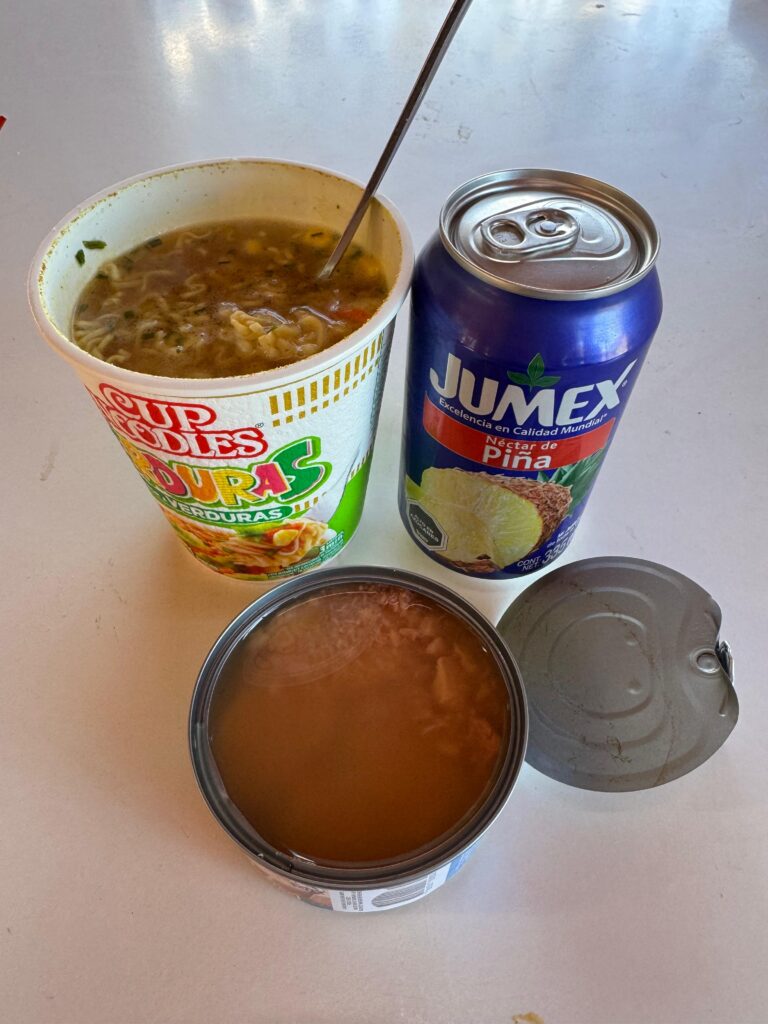
By last night, we had run out of our own food and I bought noodles and canned tuna from Paine Grande. That also tells the story pretty well. However much food you think you need, a hard trek can easily push that number up. You are simply hungrier than normal because the body is asking for more.
Planning the Hike
One thing that became obvious very early is that Torres del Paine is not the kind of trip you casually throw together. A lot of the important things need to be booked months in advance. We booked our tents through Vertice and Las Torres about six months before the trek, and that part really does need to be done early because the good options disappear fast. Once those nights are locked in, the whole route starts locking in with them. We also booked our flights around the same time, because this was one of those parts of the trip where leaving things too late would have made everything more expensive and much more complicated.
The park entry was more annoying than expected. We bought it through GreatChile, but they only sent the tickets about a month before the hike, which honestly made us pretty skeptical at the time. In the end, it worked out, and the park also seemed to have tickets on sale anyway, but it still felt unnecessarily uncertain for something tied to a trek that requires so much advance planning elsewhere.
The one thing we did not buy far ahead was the bus, and that was a mistake. You should absolutely book the bus in advance because those do fill up. When so much of the trek depends on hitting the park on time, it is not worth leaving something that basic to chance.
Weather-wise, we were lucky. In late February, it was not nearly as cold as we had expected, so in our case overpreparing for extreme cold would probably just have meant carrying extra weight for no reason. But Patagonia is still Patagonia. While we were there, other hikers told us it had snowed just the day before. So the real lesson is not to pack for deep winter by default, but also not to trust one forecast or assume the conditions will stay stable just because they look mild when you arrive.
Conversations with Other Hikers
One of the more revealing parts of the trek was what we learned just by talking to other hikers along the way.
On the first day, especially around Base Torres, there were a lot of people. At the time, it just felt crowded. But once we made it to Francés and then Paine Grande, there were noticeably fewer people on the trail. At first I did not fully understand why. After enough conversations, it started making sense.
The first reason is simple. A lot of people do the Base Torres section and stop there. That is the most iconic part of the park, so it attracts far more people than the deeper sections of the W. I still remember someone at Chileno asking about getting a bus, which said a lot by itself. Once you are in there, the logistics do not really adapt to how tired you are. You are mostly committed.
The second thing we noticed was how much attrition there was even within groups. Later on, we met hikers who had started in groups of four and ended up being the only one still continuing. That stayed with me because it showed how differently the trek hits people once the fatigue becomes real. On paper, everyone signs up for the same route. In practice, soreness, morale, pace, and confidence start splitting groups apart.
The third thing was that even among the people who kept going, many were already adjusting their plans. We saw people at Francés who were not going to Británico at all, and others who were stopping at French Valley instead. That made sense. By that point, people had already learned enough about the terrain, elevation, and their own limits to stop pretending they had to do every section just because it was technically available.
What also stood out was that many of the hikers who seemed to be handling it best had actually trained for it. When I asked, a lot of people had prepared properly, unlike us, which in hindsight is a bit embarrassing. They had treated the trek with respect before it started. Enthusiasm on the day was not enough.
At the same time, I also saw people attempting the hike who did not look particularly fit for it. I remember genuinely wondering how some of them were going to get through the harder sections. Still, the broader pattern was clear. Torres del Paine filters people. Some stop after the towers. Some split from their group. Some skip major sections. By the later days, the people left on the trail were usually the ones who had either prepared well, adapted quickly, or were simply stubborn enough to keep going.
What Would I do Differently
This hike can be done in different ways, but the biggest thing I would change is giving it one extra day.
That would have made a major difference. The length, elevation, recovery, and fixed schedule all compound the fatigue. The French Valley day made that very clear. Around 2,300 feet of elevation gain and loss is one thing when you are fresh. It is something else entirely when you are already deep into a multi-day trek, make navigation mistakes, and then still have to keep walking after the hardest section is done.
That is the key point. On the hardest day, getting back to Italiano was not the end. It was just the point where we had to collect ourselves, pick up the packs again, and somehow keep going to Paine Grande. That is exactly where one extra day would have changed the entire experience. It would have created breathing room where the route currently offered none.
I would also protect energy much better from the start. Skipping the shuttle on day one and carrying our full packs plus food up toward Base Las Torres was an avoidable mistake, and it made the following days harder than they needed to be. On a trek like this, wasted energy does not stay local. It carries forward.
And I would bring more food than I think I need. We were much hungrier than expected because the hike was simply more demanding than expected, and by the last night we had already run out of our own food and had to buy noodles and canned tuna. Carrying our own food was still the right choice, but next time I would build in more margin there too.
So if I did it again, I would still pay for the pre-made tents, still carry my own food, and still do the route east to west. But I would give the trek more space. That is the main thing. Torres del Paine is hard enough on its own. It does not need to be made harder by compressing it too tightly.
All in All
I would absolutely go back, but next time I would do the O Trek, and probably do it ten years older and much smarter. This hike taught us a lot. The next time would still be hard, but experience changes the equation. You make better calls, protect energy earlier, pack more realistically, and waste less on avoidable mistakes. That does not remove the difficulty, but it gives you a much better chance of enjoying more of it.