
1998 World Cup. I was waiting for him to shine. I was not sleeping. I was waking up just to see matches. I was so excited. Every time Ronaldo had the ball, I had that feeling that magic would happen.
Then, you know what happened. The day of the final, hours before kick off, he had that episode, the convulsion, the thing nobody could explain in real time, and yet he still ended up on the pitch.
I did not understand at the time how bad it was. Later, it got worse in a different way. The knee. Inter. The tendon. The comeback that lasted minutes, then the same knee giving up again. Doctors were not speaking in recovery language anymore, it was closer to never playing again.
But it took him out for two years. He was told he would not play again. I guess it made sense. He was too agile and too skillful, yet too strong.
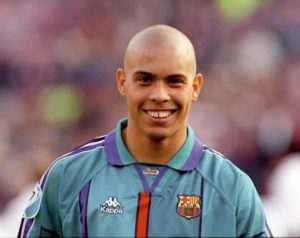 El Fenomeno
What Data Cannot Measure
What determines greatness in football? The number of goals, assists, dribbles, wins, cups? These are all stats. They are clean and countable**.** The world has some amazing players who have crazy data. In recent years, both Lionel Messi and Cristiano Ronaldo showed unprecedented statistics. Nevertheless, I don’t feel data tells everything.
Data fails to capture the joy or excitement. It captures outcomes, not the feeling right before the outcome. If we lean purely on data, the game wouldn’t be as good. We need that spark. The part that makes you sit forward without knowing why. The Brazilian Ronaldo had it all.
My measurement of greatness is whether fans would watch a game just because of that very footballer and nothing else. Not because the match matters. Not because the table says it matters. Because he matters. There’s still something beyond that. It’s that magic.
You would not only watch the game but also expect something spectacular, something extraordinary, something you haven’t seen before. And Ronaldo did it time after time. When you think about things he did on the pitch, I sometimes wonder how you even think about such things. It’s really surreal. This is the gap. Data can count what happened. It cannot count what it felt like to expect the impossible, and then actually get it.
Anticipation Is a Metric
Back then, I did not have words like narrative, variance, or expected value. I just had my body. I could feel the game change the moment he touched the ball. The stadium did it too. You could hear it in the noise, a split-second dip, then a swell.
Data tells you what happened. It does not tell you what it felt like five seconds before it happened. It does not capture the tension of a defender backing off because he has seen this movie before. It does not capture the crowd leaning forward like one organism.
And when his body failed him, it was not only an athlete getting injured. It was that feeling disappearing. The “something will happen” feeling. The reason I was waking up for matches in the first place. I felt that feeling again with Ronaldinho but that’s pretty much it.
This is why, when people ask “who is the greatest,” I struggle with lists. I understand goals, assists, trophies, and all of it. But those are the receipts. The thing I care about is whether a player can pull you into the match when nothing is at stake. Whether you watch for the possibility, not the scoreboard. That is a real measurement. It is just not one you can easily put into a table.
When Numbers Start Lying
At some point, data starts to look precise while becoming misleading. When people talk about Ronaldo today, the conversation often collapses into totals. Career goals. Seasons lost. “What if” scenarios are reduced to arithmetic. As if greatness is something you average out over time.
But football does not work like that.
Two players can end their careers with similar numbers and leave completely different imprints. One gives you consistency. The other gives you belief. Belief is dangerous. Belief bends games. It changes how defenders behave, how goalkeepers position themselves, how crowds breathe.
This is where numbers start lying, not because they are wrong, but because they are incomplete.
A metric will never show you the split second where a defender chooses survival over logic. And that split second is where players like Ronaldo lived. So when data says “this player produced X,” it silently erases something else. The way the game warped around him before anything measurable even happened.
Greatness Leaves a Vacuum
When he went down, the numbers adjusted. Other players scored. Other systems adapted. Football continued, cleanly, statistically. But something was missing. You could feel it in matches that were technically fine but emotionally flat. The sense that anything could break open at any second was gone. The game still made sense on paper. It just did not feel the same in the body.
This is what injuries really take away. Not just peak output, but the atmosphere a player creates around himself. The invisible pressure. The expectation that forces opponents to plan for chaos rather than patterns.
Data never records the absence.
It does not log the matches people stopped waking up for. It does not capture the silence where anticipation used to live. It cannot measure the disappointment of realizing that the impossible is no longer on the menu. And that is why I push back when greatness is treated like a ledger.
Some players add to the game. Others remove something when they leave.
Players Who Agree With Me
Perhaps this is football romanticism. Nevertheless, there are players and coaches who agree with me. And when people like this say it, I listen.
Ronaldo is the best player I ever played with. He had such ease with the ball. He is number one. Every day I trained with him, I saw something different, something new, something beautiful. That’s what makes the difference between a very good player, and the exception, who, for me, is Ronaldo
Zinedine Zidane
The best player I have ever played with? That’s Ronaldo, il Fenomeno. I have seen il Fenomeno do things that nobody else has ever done.
Kaka
For me, Ronaldo is the greatest. There was nobody like him. No one has influenced both football and the players who emerged as Ronaldo.
Zlatan Ibrahimovic
We can go on with other quotes but other comments would be more or like the same. They all point to the same thing, not output, but uniqueness.
Ronaldo turned magic into reality. He had a different imagination. That imagination became real on the pitch. That’s what makes him different from anyone else. Apart from this magic, he also had a lethal combination of skills. He was fast, agile, strong, and precise. Many other players have such attributes but he combined all of them at the same time. He was precise while being fast. He was agile while being strong. That mix is exactly why “just look at the data” never felt like a serious answer to me.
Why I Still Don’t Trust the Debate
Every generation feels the need to settle it. Rankings. Lists. Goat arguments. As if the game owes us a verdict. I understand why data feels reassuring here. It gives us closure. A way to end the conversation. But football was never meant to be closed. It lives in memory, in feeling, in moments that refuse to line up neatly.
When I think about Ronaldo, I do not think in total. I think in anticipation. In that reflexive tightening in the chest when he turned toward goal. In the belief that something absurd was about to work anyway.
That belief is fragile. It does not survive injury reports or regression charts. But it survives in the people who felt it. So no, I do not trust debates that pretend numbers can finish this discussion. They can inform you. They cannot end it.
Some players are not arguments to be won. They are experiences.