
In university, I have master students studying software engineering. I often ask them one question: how do authors become authors? Do they suddenly start writing great novels in one go? Of course not. They study. They read. They learn from others.
So why do we think software craftsmanship is any different?
Usually, there’s silence. Because it isn’t.
To write better, you have to read more. It’s that simple. I remember how much I learned back in the day solving TopCoder challenges. The old version of LeetCode, if you will. Even when I solved a problem, I’d look at other people’s solutions and realize how elegantly some of them wrote it. Mine worked, but theirs made me wish I’d thought of it.
Over the years, you start reading more code because you want to understand how things actually work. You see libraries, frameworks, patterns hidden underneath. You see how well-thought-out libraries are built and how principles are applied in practice. Naturally, that improves your own code too.
Here’s why you should read more code.
Pick up New Techniques
When you get stuck, go into the rabbit hole. Peeking under the hood of libraries and frameworks reveals their sturdy mechanics. Diving into these repositories can teach you efficient methods and best practices. Otherwise, it can take years to learn the same methods.
Reading source code from libraries you use daily say Spark, React, or Flask gives you access to design decisions you’d never encounter in tutorials. You start noticing subtle optimizations, naming conventions, and little tricks that make big systems reliable. Every time you read a well-maintained open-source repo, it’s like watching a grandmaster play chess. I do that a lot.
Observe Paradigms and Patterns
Beyond theoretical knowledge, reading code allows you to witness programming paradigms and design patterns, like SOLID and the Visitor pattern, in practical applications. Seeing principles and patterns in real life scenarios offers theory matching the practice. When you start coding your own solutions, the pattern matching will become your thought process. You will naturally use principles and patterns.
You begin to recognize the invisible architecture of thought behind code. Why a developer chose composition over inheritance. Why they used dependency injection instead of hardcoding. Patterns stop being abstract theory and become a way of thinking. Over time, you start predicting what a clean codebase should look like before even seeing it. That’s when you know the patterns have clicked.
Recognize What Good Looks Like
By studying well-written code, you set a reference point for your own work. Good code sets high standards that you might expect from yourself. It can push you to write better code. It’s like developing taste in writing or music. The more you expose yourself to high-quality work, the better your internal compass becomes. You start catching the smell of bad code early. Be it spaghetti logic, unclear naming, endless nesting. And you instinctively rewrite it before it grows. Reading clean, expressive code trains your eyes to crave clarity.
Master Problem-Solving Techniques
Every piece of code tells a story of how a problem was approached and solved. Each codebase solves a different problem; therefore, they have different solving techniques. You can master these by digging deeper into the codebase.
Some engineers jump straight to Stack Overflow when they get stuck. But if you dig through real-world implementations instead, you’ll find thought processes that Stack Overflow can’t teach. You will quickly realize how people handle trade-offs, edge cases, and performance. Each codebase you explore adds another ‘mental pattern’ to your toolkit. Eventually, you stop solving problems from scratch. Gradually, you remix proven ideas with your own style.
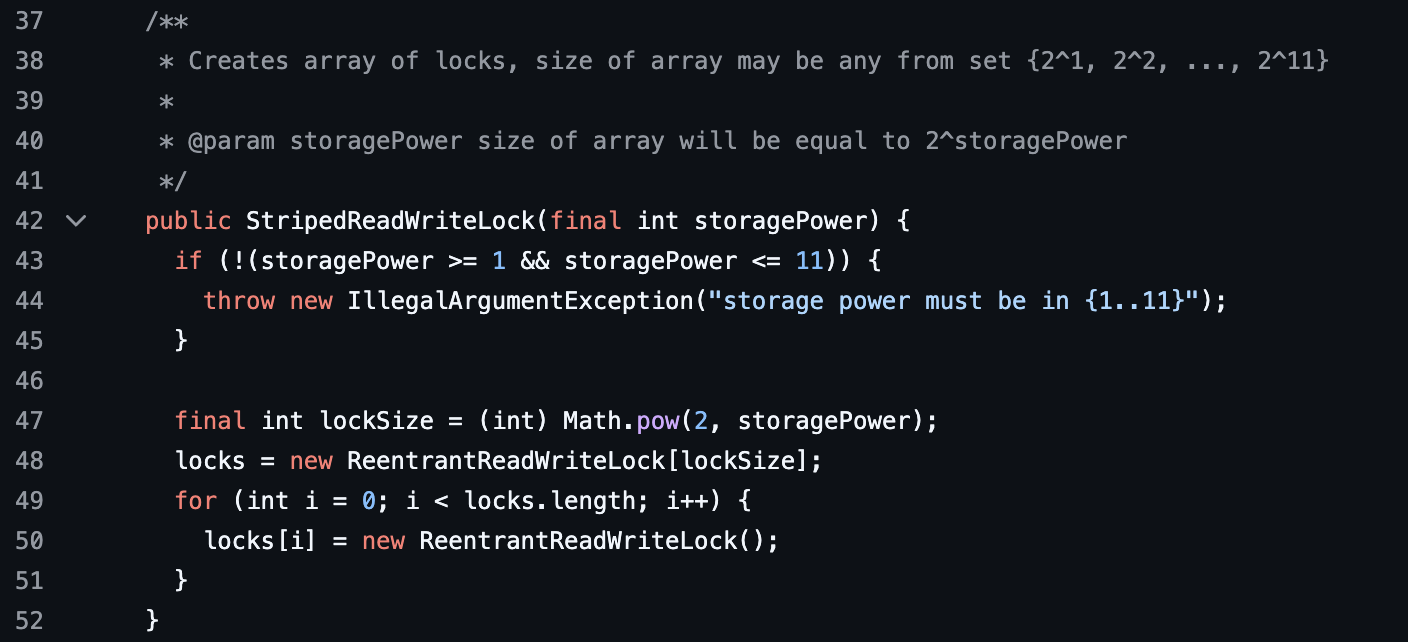 Just a piece of code.
Learn from Imperfections
Not all code is perfect. Yet, there’s a learning opportunity in hacks and shortcuts. Encountering less-than-ideal code helps you identify what to avoid in your own work. Mistakes are just stepping stones for everyone.
Reading bad code isn’t a waste of time. It’s free education in what not to do. Sometimes you’ll stumble on clever shortcuts that aged poorly or hacks written under deadlines. Seeing these mistakes in context helps you understand the human side of software. It’s not about judging others. It’s about recognizing how easily messy code grows when clarity isn’t prioritized.
Writing code teaches you what you reach for naturally. Reading other code shows you the choices you did not know were available. Pick a codebase outside your usual stack and follow one path until you understand why it was built that way.